Why Is Chicken Alfredo Bake the Pasta Dish That Consistently Earns More Recipe Saves, More Repeat Cooks, and More “This Is the Best Thing I’ve Ever Made” Comments Than Almost Any Other Weeknight Dinner?
Here is a data point that captures something real: according to Pinterest’s 2024 annual food report, baked pasta dishes featuring Alfredo sauce saw a 240% increase in recipe saves compared to the previous year — outpacing every other pasta category on the platform. And within that category, chicken Alfredo bake consistently ranks as the most saved, most made, and most positively reviewed variation by a significant margin.
The reason is not mysterious. Chicken Alfredo bake delivers the full richness of a restaurant-quality pasta dish — silky, Parmesan-loaded Alfredo sauce coating every piece of pasta, tender chunks of seasoned chicken, a golden, bubbling cheese crust on top — in a single baking dish that serves the whole family, reheats beautifully, and requires a level of active cooking effort that most home cooks genuinely find manageable even on a weeknight.
What separates a great chicken Alfredo bake from a mediocre one is the sauce. A sauce built from scratch — real butter, real garlic, real cream, real Parmigiano-Reggiano — produces something silky, deeply savory, and genuinely rich in a way that jarred Alfredo sauce cannot replicate. The technique is simple and the sauce comes together in under 10 minutes. It is the foundation of everything that makes this dish worth making, worth saving, and worth making again the week after.
Ingredients
Every ingredient in this recipe earns its place. The quantities below fill a 9×13-inch baking dish and serve 6–8 generously.
For the Chicken:
- 1.5 lbs (680g) boneless, skinless chicken breasts, cut into 1-inch pieces
- OR 1.5 lbs boneless, skinless chicken thighs — they stay juicier through the bake and are strongly recommended
- 1 tablespoon olive oil
- 1 teaspoon kosher salt
- ½ teaspoon freshly ground black pepper
- 1 teaspoon garlic powder
- ½ teaspoon Italian seasoning
- ½ teaspoon smoked paprika
For the Pasta:
- 1 lb (450g) penne, rigatoni, or ziti — all three hold the creamy sauce inside their ridges and tubes beautifully; avoid thin pasta like spaghetti or linguine, which does not integrate well into a baked casserole
- Generously salted boiling water for cooking
For the Homemade Alfredo Sauce:
- 4 tablespoons (56g) unsalted butter
- 5 garlic cloves, minced
- 2 tablespoons all-purpose flour
- 2 cups (480ml) heavy cream
- 1 cup (240ml) whole milk
- 1½ cups (150g) freshly grated Parmigiano-Reggiano, plus more for topping — always grate your own from a block; pre-shredded Parmesan contains anti-caking agents that prevent smooth melting and produce a grainy, broken sauce
- ½ teaspoon fine sea salt
- ¼ teaspoon freshly ground black pepper
- ¼ teaspoon ground nutmeg (the traditional, subtle seasoning in classic Alfredo that adds warmth and depth most people cannot identify but immediately notice is missing when it is left out)
- ½ cup (120ml) reserved pasta cooking water — this starchy liquid is liquid gold for Alfredo sauce; it emulsifies the sauce, prevents it from seizing during baking, and keeps the pasta moist through the full bake time
For the Topping:
- 1 cup (100g) shredded whole-milk mozzarella
- ½ cup (50g) freshly grated Parmigiano-Reggiano
- ½ cup (55g) seasoned panko breadcrumbs tossed with 1 tablespoon melted butter (optional — adds a golden, crispy crust that contrasts beautifully with the creamy interior)
- 1 tablespoon fresh flat-leaf parsley, chopped, for finishing
Smart Substitutions: No heavy cream? Use a combination of whole milk and cream cheese — 1.5 cups of whole milk whisked with 4 oz of softened cream cheese produces a creamy, tangy sauce with slightly less richness but excellent flavor. Gluten-free? Use gluten-free pasta and replace the all-purpose flour in the sauce with cornstarch — use 1 tablespoon whisked with 2 tablespoons of cold milk before adding to the butter. Want to add vegetables? Baby spinach stirred into the sauce before baking, sun-dried tomatoes, frozen peas added with the pasta, or roasted broccoli florets all integrate beautifully. For extra flavor in the chicken, marinate it for 30 minutes in lemon juice, garlic, and Italian seasoning before cooking.
Timing
Chicken Alfredo bake is a complete, from-scratch dinner that fits within a realistic weeknight window when components are prepared efficiently in parallel.
- Prep Time: 20 minutes (cooking chicken, boiling pasta, making sauce)
- Cook Time: 25 minutes (baking)
- Total Time: 45 minutes
- Servings: 6–8
- Difficulty Level: Easy to Intermediate
Pro Timing Tip: Run three things simultaneously for maximum efficiency — bring the pasta water to a boil and start cooking the pasta, cook the chicken in a separate skillet, and make the Alfredo sauce in a third pan. All three finish within a few minutes of each other and the assembly takes only 5 minutes before the dish goes into the oven. This parallel cooking approach reduces the total time by 15–20 minutes compared to cooking each component sequentially and makes an otherwise ambitious dinner genuinely achievable on a weeknight.
Step 1: Cook and Season the Chicken
Season the chicken pieces with salt, pepper, garlic powder, Italian seasoning, and smoked paprika. Toss to coat evenly. Heat the olive oil in a large skillet over medium-high heat until shimmering. Add the chicken pieces in a single layer — do not crowd the pan, and work in batches if necessary. Cook without stirring for 2–3 minutes until a golden-brown crust forms on the bottom, then flip and cook for another 2 minutes.
The chicken does not need to be fully cooked through at this stage — it will finish cooking in the oven during the bake. The goal here is to develop a golden, flavorful crust on the exterior through the Maillard reaction, which produces the concentrated, savory flavor compounds that distinguish properly seared chicken from pale, boiled-tasting chicken in a casserole. Pull the chicken from the heat when it is golden on the outside and just barely cooked at the very center — slightly underdone chicken going into the bake is correct and intentional.
Remove the chicken to a plate and set aside. Do not wipe the skillet — the browned bits left in the pan are flavor and will be captured in the sauce if you use the same pan, or can be deglazed with a splash of chicken broth as a cook’s snack.
Step 2: Cook the Pasta
Bring a large pot of water to a boil. Season the water generously with salt — it should taste distinctly salty, like mild seawater. This is the only opportunity to season the pasta itself, and under-salted pasta produces a dish that tastes flat no matter how flavorful the surrounding sauce is.
Cook the pasta 2 minutes less than the package directions specify — pull it at al dente, slightly firmer than you would serve it in a non-baked preparation. The pasta will continue cooking in the oven during the 25-minute bake, and pasta that goes in fully cooked will be overcooked and mushy by the time the dish comes out. Reserve 1 full cup of the starchy pasta cooking water before draining — this is non-negotiable. The starch in the pasta water emulsifies the Alfredo sauce, prevents it from breaking during baking, and keeps the pasta moist and saucy through the full oven time. Drain the pasta and set aside.
Step 3: Make the Homemade Alfredo Sauce
In a large, wide saucepan or the same skillet used for the chicken over medium heat, melt the butter until it foams and the foam begins to subside. Add the minced garlic and cook for 60–90 seconds, stirring constantly, until deeply fragrant and just beginning to turn golden at the edges. Watch it closely — garlic that burns turns acrid and bitter and will ruin the sauce irreparably.
Add the flour and whisk constantly for 60 seconds, cooking it into the butter and garlic to form a smooth roux. This brief roux step is what gives the Alfredo sauce its body and prevents it from being too thin — without it, the sauce would separate and become greasy during baking. Add the heavy cream and whole milk gradually, whisking constantly and vigorously to prevent lumps. Continue whisking over medium heat until the sauce thickens slightly and begins to simmer at the edges — about 4–5 minutes.
Reduce the heat to low. Add the ground nutmeg, salt, and pepper. Begin adding the freshly grated Parmigiano-Reggiano in three batches, whisking each addition until fully melted and incorporated before adding the next. The low heat is essential — adding Parmesan to a sauce that is too hot causes the proteins to seize and clump, producing a grainy rather than silky result. Add ½ cup of the reserved pasta cooking water and whisk to incorporate — watch as the sauce becomes noticeably smoother and more fluid. Taste and adjust seasoning. The sauce should taste rich, deeply savory, nutty from the Parmesan, and slightly more aggressively seasoned than you want the finished dish to be — flavors will mellow during baking.
Step 4: Combine and Assemble
Preheat the oven to 375°F (190°C). Butter a 9×13-inch baking dish generously. In the largest bowl available, combine the drained pasta, the seared chicken pieces, and the Alfredo sauce. Toss gently but thoroughly until every piece of pasta and chicken is evenly coated in the sauce. The mixture should look generously saucy — it will absorb during baking and a dry-looking casserole going in produces a dry-tasting casserole coming out.
If the mixture looks too thick or the pasta has absorbed too much sauce during the tossing process, add the remaining reserved pasta water a quarter cup at a time and toss again. The consistency going into the baking dish should be looser and saucier than you want the finished dish to be.
Transfer the pasta mixture to the prepared baking dish, spreading it into an even, level layer. Press gently to eliminate large air pockets between the pasta pieces.
Step 5: Add the Topping and Bake
Scatter the shredded mozzarella evenly over the surface of the pasta, followed by the additional Parmigiano-Reggiano. If using the panko topping, scatter the buttered breadcrumbs evenly over the cheese layer — distribute them in a relatively uniform layer so that the entire surface browns evenly rather than producing isolated golden patches surrounded by pale areas.
Cover the baking dish tightly with aluminum foil. Bake covered at 375°F for 15 minutes — the covered baking phase traps steam inside the dish, finishing the cooking of the chicken, heating the pasta through, and allowing the sauce to penetrate every piece without evaporating. Remove the foil and bake uncovered for an additional 10 minutes until the cheese is fully melted, bubbling actively at the edges, and developing golden-brown patches across the surface. For an especially golden, gratinéed top, switch the oven to broil for the final 2–3 minutes — watch the dish constantly and remove immediately when the top is deep golden but before it begins to burn.
Step 6: Rest and Serve
Remove the baking dish from the oven and let it rest on a wire rack or trivet for 5 full minutes before serving. This resting period is more important than it might seem — the sauce continues to thicken and set during those 5 minutes, transforming from a very fluid, potentially soupy consistency into a properly creamy, cohesive sauce that coats the pasta rather than pooling at the bottom of the bowl. Serving too soon produces a watery presentation. Five minutes of patience produces a beautiful, restaurant-quality result.
Scatter the fresh parsley over the top immediately before serving. Portion the dish with a large serving spoon, ensuring each serving captures pasta, chicken, and a generous portion of the golden, cheesy top layer. Serve directly from the baking dish at the table for a warm, abundant, family-style presentation — the aroma alone will bring everyone to the table before you have finished calling them.
Nutritional Information
Based on one serving (approximately one eighth of the full 9×13-inch dish, with chicken, pasta, Alfredo sauce, and cheese topping):
| Nutrient | Amount Per Serving |
|---|---|
| Calories | ~620 kcal |
| Protein | 38g |
| Total Fat | 28g |
| Saturated Fat | 15g |
| Carbohydrates | 52g |
| Fiber | 2g |
| Sugars | 4g |
| Sodium | 740mg |
| Calcium | 380mg |
| Iron | 2.4mg |
| Vitamin A | 780 IU |
| Potassium | 420mg |
Nutritional Context: With 38 grams of protein per serving, chicken Alfredo bake is one of the most protein-dense pasta dishes available — the combination of chicken, Parmesan, and mozzarella delivers complete protein alongside meaningful calcium, contributing approximately 38% of the average adult’s daily calcium requirement per serving. The Parmigiano-Reggiano is one of the most calcium-dense foods in the culinary world, with a single ounce providing more calcium per gram than most dairy products. At 620 calories for a genuinely filling, protein-rich portion, this dish sits comfortably within the range of a balanced, satisfying main course dinner.
Healthier Alternatives for the Recipe
Chicken Alfredo bake is a rich, indulgent dish and that richness is a core part of its appeal. These modifications lighten it meaningfully without stripping away the creaminess that defines it.
Lighten the Sauce: Replace the heavy cream with a combination of 1 cup of whole milk and 1 cup of low-sodium chicken broth — thicken with an extra tablespoon of flour in the roux to compensate for the reduced fat content. The sauce will be noticeably less rich but entirely creamy and satisfying, and the per-serving calorie count drops by approximately 100–120 calories.
Increase the Protein, Reduce the Carbohydrates: Replace half the pasta with an equal volume of steamed broccoli florets or zucchini noodles — both integrate seamlessly into the Alfredo sauce and absorb the flavors beautifully. The dish becomes significantly lower in carbohydrates, higher in fiber, and higher in vitamins without losing its essential character.
Use Cauliflower Sauce: Blend 2 cups of steamed cauliflower with the garlic, milk, nutmeg, salt, and pepper until completely smooth. Use this as the base of the sauce in place of the heavy cream roux — the cauliflower provides body, creaminess, and a neutral flavor that carries the Parmesan beautifully at a fraction of the calories. Per-serving calorie reduction: approximately 140 calories.
Whole Wheat Pasta: Swap regular penne for whole wheat penne — it adds 3–4 grams of additional fiber per serving, a nuttier flavor that complements the rich sauce, and a slightly lower glycemic index than refined pasta. The texture is slightly firmer and more dense, which some people find more satisfying in a baked pasta application.
Lower Sodium: Use unsalted butter, reduce the Parmesan by ¼ cup (supplementing with nutritional yeast for the same umami depth), and cook the pasta in lightly rather than generously salted water. Season the finished dish with a smaller amount of finishing salt at the table. These adjustments can reduce per-serving sodium by 150–200mg.
Serving Suggestions
Chicken Alfredo bake is rich, creamy, and filling enough to stand alone as a complete dinner — but these pairings elevate the meal to something truly memorable.
With Garlic Bread: The single most natural accompaniment to any Alfredo-based pasta dish. Slice a baguette diagonally, brush generously with a mixture of softened butter, minced garlic, and fresh parsley, and broil until golden. The garlic bread provides crunch, soaks up the extra Alfredo sauce from the plate, and makes the entire meal feel celebratory. This is not an optional enhancement — it is a required element of the complete experience.
With a Caesar Salad: A crisp, well-dressed Caesar salad is the classic counterpoint to a rich pasta bake — the acidic dressing, crunchy croutons, and cool romaine cut directly through the cream and cheese of the Alfredo in a way that refreshes the palate between bites and makes the pasta taste even better. Dress the salad at the very last minute to maintain its crispness against the warm pasta.
With Roasted Broccoli: A simple sheet pan of broccoli florets roasted at 425°F with olive oil, salt, and pepper until crispy and caramelized provides a textural and nutritional counterpoint to the creamy pasta. The slightly bitter, charred edges of roasted broccoli are one of the most effective flavor contrasts against the richness of an Alfredo sauce.
For a Date Night: Serve in wide, warmed pasta bowls rather than directly from the baking dish — use a deep serving spoon to capture the creamy sauce pooling in the bottom of the dish. Finish each bowl with an extra grating of Parmigiano-Reggiano, a crack of black pepper, and a drizzle of high-quality extra virgin olive oil. A glass of full-bodied white wine — a Chardonnay, Viognier, or white Burgundy — completes a dinner that is entirely worthy of a special occasion.
Family Style Pot Luck: Wrap the baking dish in foil and transport directly to a potluck or dinner gathering — it holds its temperature beautifully for up to 45 minutes wrapped and arrives bubbling and fragrant. No reheating required, no serving complexity, universally beloved by every demographic from young children to discerning adults.
Topped with Crispy Prosciutto: Drape thin slices of prosciutto over the top of the assembled, uncooked pasta bake before covering with foil. During baking, the prosciutto crisps slightly and its salty, cured flavor infuses the top layer of the pasta with a dimension of complexity that elevates the dish into something genuinely sophisticated. Finish with fresh basil leaves and an extra drizzle of olive oil.
Common Mistakes to Avoid
These are the specific errors that most consistently prevent chicken Alfredo bake from reaching its potential.
Using pre-shredded Parmesan from a bag: Pre-shredded Parmesan is coated in cellulose or potato starch to prevent clumping — these additives prevent the cheese from melting smoothly and produce a grainy, gritty sauce rather than a silky one. Always grate Parmigiano-Reggiano from a block immediately before using. This is the single most impactful ingredient specification in the entire recipe.
Not salting the pasta water: Pasta cooked in unsalted water tastes flat and bland regardless of how flavorful the surrounding sauce is. The pasta water should taste like mild seawater — approximately 1 tablespoon of kosher salt per 4 quarts of water. This is the only opportunity to season the pasta itself and it cannot be compensated for after the fact.
Fully cooking the pasta before baking: Pasta that goes into the bake fully cooked emerges overcooked and mushy. Always undercook the pasta by 2 full minutes — it will finish cooking in the oven and emerge at the perfect al dente texture.
Skipping the reserved pasta water: The starchy pasta cooking water is an emulsifier that keeps the Alfredo sauce silky and cohesive during baking. Without it, the sauce often separates during the oven time — the fat rises to the top and the pasta sits in a greasy, broken sauce rather than a unified, creamy one. Reserve a full cup before draining and use it.
Adding cheese to a sauce that is too hot: Parmesan added to a very hot sauce seizes and clumps rather than melting smoothly. Always reduce the heat to low before adding cheese, and add it in batches rather than all at once. Patience during the cheese-addition step is directly rewarded with a noticeably smoother, creamier finished sauce.
Not baking covered first: Skipping the covered baking phase causes the sauce to evaporate from the top of the dish before the interior has had time to heat through, producing a dry top layer over an under-heated center. The 15-minute covered phase is essential for even heating and moisture retention.
Storing Tips for the Recipe
Refrigerating: Allow the bake to cool to room temperature before covering the dish tightly with plastic wrap or foil, or transferring to airtight containers. Refrigerate for up to 4 days. The sauce thickens considerably during refrigeration as the pasta continues to absorb moisture — this is normal and expected.
Reheating Individual Portions: Add 1–2 tablespoons of milk or chicken broth to individual portions before microwaving — this replaces the moisture the pasta has absorbed during refrigeration and restores the sauce to its original creamy consistency. Microwave at 70% power for 90 seconds, stir, then heat for another 60 seconds. Alternatively, reheat in a covered skillet over medium-low heat with a splash of milk, stirring gently until heated through.
Reheating the Full Dish: Cover the baking dish tightly with foil and reheat in a 350°F oven for 20–25 minutes until heated through. Add 3–4 tablespoons of milk or broth drizzled over the surface before covering to replenish the moisture absorbed during refrigeration. Remove the foil for the final 5 minutes to re-crisp the cheese topping.
Freezing: Chicken Alfredo bake freezes well for up to 2 months. For best results, freeze before the final bake — assemble the dish completely through the topping step, cover tightly with plastic wrap and then foil, and freeze unbaked. When ready to cook, thaw overnight in the refrigerator and bake at 375°F as directed, adding 10–12 additional minutes to account for the cold starting temperature.
Make-Ahead Strategy: The Alfredo sauce can be made up to 3 days in advance and refrigerated in an airtight container. The chicken can be seared and refrigerated up to 2 days in advance. On the night of cooking, simply boil the pasta, warm the sauce with a splash of milk, combine, and bake — reducing the active cooking time on the night of serving to under 20 minutes.
Conclusion
Chicken Alfredo bake is the pasta dish that earns its permanent place in a family’s dinner rotation not through novelty but through consistent, reliable, deeply satisfying excellence. It is rich without being heavy. Creamy without being cloying. Familiar enough to be comforting, well-made enough to be genuinely impressive. It is the dinner that disappears fastest from the baking dish, that generates the most requests for seconds, and that produces the specific kind of quiet, contented table silence that is the highest compliment home cooking can receive.
The technique is learnable in a single session — make the Alfredo sauce once from scratch and you will never go back to a jar. Season the pasta water. Undercook the pasta. Reserve the starchy cooking water. Bake covered first, then uncovered for color. Rest before serving. Those six principles are the entirety of the skill required to produce something genuinely outstanding.
Make it this week. Serve it with garlic bread and Caesar salad. Let the table eat until the dish is empty. Share your results in the comments — did you add spinach, try the prosciutto topping, or add vegetables to the sauce? We want to hear what made your version your own. And if chicken Alfredo bake has made you a devoted baked pasta enthusiast, explore our [Baked Rigatoni with Italian Sausage and Ricotta], [Creamy Tuscan Chicken Pasta Bake], and [Four Cheese Baked Ziti with Fresh Basil] for more creamy, golden, crowd-feeding baked pasta recipes that deliver maximum satisfaction with every forkful.
FAQs
Q: Can I use jarred Alfredo sauce instead of making it from scratch? Yes — and it is a legitimate shortcut that produces a very good result. Use 2 jars (15 oz each) of a quality store-bought Alfredo sauce such as Rao’s Homemade Alfredo or Priano Alfredo Sauce. Stir in 2 minced garlic cloves sautéed in butter, a pinch of nutmeg, and ½ cup of reserved pasta water before combining with the pasta and chicken. The homemade sauce is noticeably superior in depth and silkiness, but the jarred version with these additions is genuinely delicious and reduces active cooking time significantly.
Q: Why did my Alfredo sauce turn out grainy? Grainy Alfredo sauce is almost always caused by one of three things: the heat was too high when the Parmesan was added, the cheese was added all at once rather than in gradual batches, or pre-shredded bagged Parmesan was used. Always reduce the heat to low before adding cheese, add it in three separate additions, and use freshly grated cheese from a block. If the sauce has already turned grainy, whisk in a tablespoon of cream cheese or a splash of additional heavy cream over very low heat — the cream cheese acts as an emulsifier that can sometimes rescue a broken sauce.
Q: Can I make this dish vegetarian? Yes, very easily. Omit the chicken entirely and replace with roasted vegetables — broccoli, mushrooms, sun-dried tomatoes, and artichoke hearts all work beautifully in an Alfredo bake. For protein, add a drained can of cannellini beans or a cup of ricotta dotted over the pasta before adding the cheese topping. The Alfredo sauce itself is vegetarian as written.
Q: How do I prevent the pasta from drying out during baking? Three strategies work together to prevent dryness. First, undercook the pasta by 2 minutes — fully cooked pasta absorbs all available sauce during baking and has nothing left. Second, ensure the sauce-to-pasta ratio is generous going into the dish — it should look slightly saucier than you want the finished dish to be. Third, bake covered for the first 15 minutes — the trapped steam prevents the sauce from evaporating before it has had time to penetrate the pasta. The reserved pasta water stirred into the sauce is also a critical moisture insurance policy throughout the bake.
Q: Can I use a different pasta shape? Yes — penne, rigatoni, and ziti are recommended because their tubes and ridges trap the sauce inside and create a cohesive bake. Other excellent options include farfalle, cavatappi, fusilli, and medium shells. Avoid long pasta shapes like spaghetti, linguine, or fettuccine — they tangle during baking and do not integrate well into a casserole format. Avoid small pasta shapes like orzo or ditalini — they absorb too much sauce and produce a dense, starchy result.
Q: What wine pairs best with chicken Alfredo bake? The richness of Alfredo sauce calls for white wines with enough body and texture to stand up to the cream and Parmesan without being overwhelmed. A full-bodied oaked Chardonnay — particularly a white Burgundy or a California Chardonnay with balanced acidity — is the classic pairing. Viognier, with its floral aromatics and stone fruit notes, is a slightly more adventurous choice that complements the dish beautifully. For those who prefer red wine, a light Pinot Noir with enough acidity to cut through the cream works surprisingly well and is a pairing worth exploring.
Q: Can I add bacon or pancetta to this recipe? Absolutely — and the result is extraordinary. Cook 6 strips of bacon or 4 oz of diced pancetta until crispy, crumble or dice it, and add half to the pasta mixture during assembly and scatter the other half over the cheese topping before baking. The salty, smoky, crispy pork fat threads through the creamy Alfredo sauce in a way that adds both textural contrast and a deeply savory, complex dimension that the dish does not have without it. Reduce the added salt in the sauce slightly to account for the bacon’s contribution.
Chicken Alfredo Bake
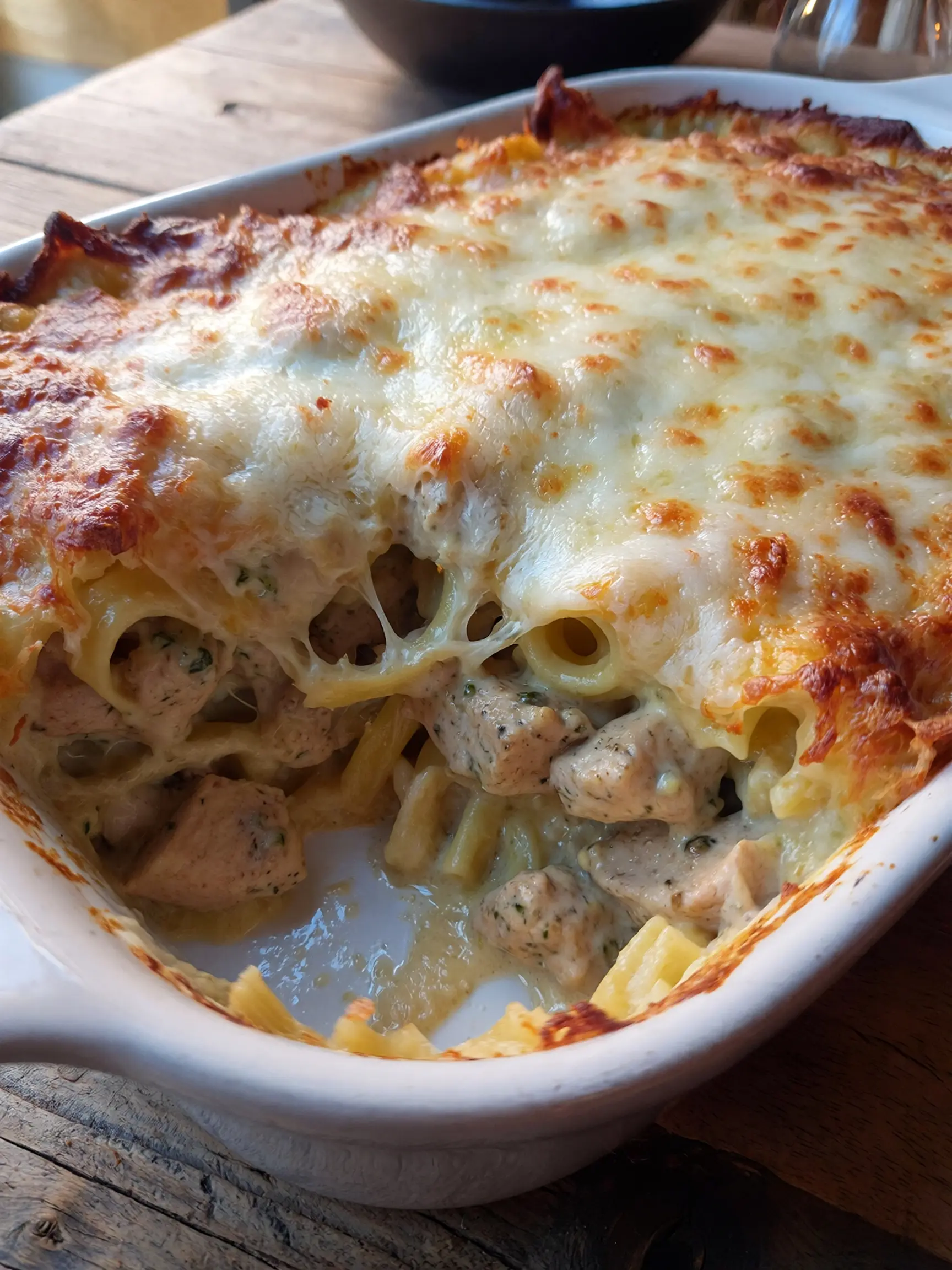
A creamy and delicious Chicken Alfredo Bake, perfect for dinner any night of the week!
Ingredients
- 2 cups cooked chicken, shredded
- 12 oz fettuccine pasta
- 4 cups Alfredo sauce
- 1 cup mozzarella cheese, shredded
- 1/2 cup Parmesan cheese, grated
- 1 tsp garlic powder
- Salt and pepper to taste
- Parsley for garnish (optional)
Instructions
- Preheat the oven to 350°F (175°C).
- Cook the fettuccine pasta according to package directions; drain and set aside.
- In a large mixing bowl, combine the cooked chicken, pasta, Alfredo sauce, garlic powder, salt, and pepper.
- Transfer the mixture to a greased baking dish.
- Top with mozzarella and Parmesan cheese.
- Bake for 25-30 minutes or until the cheese is melted and bubbly.
- Garnish with parsley before serving.
Nutrition Information
- Calories: 450 kcal
- Cholesterol: 120 mg
- Sodium: 800 mg
- Carbohydrates: 45 g
- Fiber: 3 g
- Sugar: 2 g
- Protein: 30 g