Is Sheet Pan Chicken the Most Practical, Nutritious, and Consistently Satisfying Weeknight Dinner Available — And Are You Getting the Most Out of It?
Here is a number worth pausing on: according to a 2023 national survey conducted by the NPD Group, the average American home cook spends 37 minutes preparing dinner on weeknights — and considers anything requiring more than one pan or more than 45 minutes total to be “too complicated for a regular night.” That constraint eliminates an enormous percentage of otherwise excellent recipes from the weeknight conversation.
Sheet pan chicken and vegetables slots comfortably inside that constraint and delivers something that most 37-minute dinners cannot: genuinely restaurant-quality results. Chicken with a properly seasoned, golden-crisped skin. Vegetables caramelized at the edges and tender at the center. A single pan. Minimal cleanup. And a meal that provides complete nutrition — lean protein, complex carbohydrates, fiber, vitamins — in a format that the entire family reliably eats without complaint.
According to Google Trends, “sheet pan chicken” has grown by 290% in search volume over the past four years, making it one of the most consistently rising dinner recipe categories in American home cooking. The reason is simple: it works. Every time. With almost any combination of vegetables. At any skill level. This recipe and guide covers the technique in its entirety — the right cut of chicken, the right vegetables and how to prepare them, the exact temperature for perfectly cooked results, and the flavor variations that keep this dinner interesting week after week.
Ingredients
The ingredient list below is for the classic version — a herb-seasoned chicken with a roasted vegetable medley. Variations and customization options are detailed throughout. The quantities serve 4 generously.
For the Chicken:
- 4 bone-in, skin-on chicken thighs (the gold standard for sheet pan cooking — the bone protects the meat from drying out and the skin crisps beautifully at high heat)
- OR 4 bone-in, skin-on chicken leg quarters for a larger, more generous serving
- OR 4 boneless, skinless chicken breasts if preferred — note that they cook faster and benefit from being pounded to an even thickness
- 2 tablespoons olive oil
- 1 teaspoon kosher salt
- ½ teaspoon freshly ground black pepper
- 1 teaspoon garlic powder
- 1 teaspoon onion powder
- 1 teaspoon smoked paprika
- ½ teaspoon dried oregano
- ½ teaspoon dried thyme
- ¼ teaspoon cayenne pepper (optional — for gentle background warmth)
For the Vegetables:
- 1 lb (450g) baby potatoes or Yukon Gold potatoes, halved
- 2 medium carrots, peeled and cut into 1-inch pieces
- 1 medium red onion, cut into 1-inch wedges
- 1 medium zucchini, cut into ½-inch half-moons
- 1 red bell pepper, cut into 1-inch pieces
- 1 yellow bell pepper, cut into 1-inch pieces
- 4 garlic cloves, peeled and left whole
- 3 tablespoons olive oil
- 1 teaspoon kosher salt
- ½ teaspoon freshly ground black pepper
- 1 teaspoon Italian seasoning
- ½ teaspoon smoked paprika
For Finishing:
- 1 tablespoon fresh lemon juice
- 2 tablespoons fresh flat-leaf parsley, roughly chopped
- 1 tablespoon fresh thyme leaves
- Lemon wedges for serving
- Optional: 2 tablespoons unsalted butter, placed on top of the chicken pieces in the final 5 minutes of roasting for an extraordinary richness and gloss
Smart Substitutions: No baby potatoes? Sweet potatoes cut into 1-inch cubes work beautifully and add natural sweetness and additional nutrients. No zucchini? Asparagus, broccoli florets, green beans, or Brussels sprouts halved all roast wonderfully alongside chicken — just add them in the last 15–20 minutes of cooking since they cook faster than root vegetables. Prefer a Mediterranean flavor profile? Add olives, capers, and cherry tomatoes in the last 10 minutes of roasting and finish with fresh oregano and crumbled feta. For a lemon herb version, replace the smoked paprika with lemon zest and add a generous handful of fresh rosemary sprigs scattered across the pan before roasting.
Timing
Sheet pan chicken and vegetables is one of the most time-efficient proper dinners available. The active prep is minimal and the oven does all the real work — you are largely free while dinner cooks itself.
- Prep Time: 15 minutes (cutting vegetables, seasoning chicken)
- Cook Time: 40–45 minutes
- Total Time: 55–60 minutes
- Servings: 4
- Difficulty Level: Very Easy
Pro Timing Tip: Season the chicken thighs and refrigerate them uncovered on a wire rack for at least 1 hour before cooking — or overnight for maximum flavor development and skin crispiness. The uncovered refrigeration dries the surface of the skin slightly, which is the single most impactful thing you can do to ensure a genuinely crispy, golden result. Pat the chicken dry again with paper towels immediately before adding it to the pan, even after the overnight dry brine, to remove any surface moisture that has accumulated.
Step 1: Preheat and Prepare
Preheat your oven to 425°F (220°C). This temperature is deliberately high and is not negotiable — lower temperatures produce pale, soft-skinned chicken and under-caramelized vegetables. The high heat is what creates the Maillard browning reaction on both the chicken skin and the vegetable surfaces, generating the hundreds of complex flavor compounds that separate a roasted dinner from a baked one.
Place a large rimmed sheet pan — ideally 18×13 inches — in the oven as it preheats. A preheated pan creates immediate contact heat on the vegetables the moment they touch the surface, initiating caramelization from below before the oven heat even reaches them from above. This single step meaningfully improves the browning and caramelization of everything on the pan.
Pat the chicken pieces completely dry with paper towels. This is the most important step for crispy skin and cannot be skipped or abbreviated. Surface moisture on chicken skin converts to steam during roasting, and steam is the enemy of crispiness — it prevents the Maillard reaction from occurring on the skin surface, producing pale, rubbery skin instead of the shatteringly crisp, golden result you are after.
Step 2: Season the Chicken
In a small bowl, combine the salt, pepper, garlic powder, onion powder, smoked paprika, oregano, thyme, and cayenne. Mix well. Drizzle the chicken pieces with olive oil and use your hands to rub the oil evenly over every surface — including under the skin if possible. Carefully loosen the skin from the meat using your fingers, creating a pocket, and push a portion of the spice blend directly onto the meat surface beneath the skin. Season the exterior skin surface with the remaining spice blend, pressing it firmly so it adheres.
Seasoning both under and over the skin achieves two different things. The under-skin seasoning flavors the meat directly throughout the cooking process, penetrating deeply into the thickest part of the thigh. The over-skin seasoning creates the flavorful, aromatic crust on the exterior that makes the chicken visually appealing and provides the concentrated flavor hit in every first bite.
Step 3: Season and Prep the Vegetables
Place the halved baby potatoes, carrot pieces, and red onion wedges in a large mixing bowl — these are the denser, slower-cooking vegetables that need the most time in the oven and should go on the pan first. Drizzle with 2 tablespoons of olive oil and add half the salt, pepper, Italian seasoning, and smoked paprika. Toss thoroughly until every piece is evenly coated.
In a separate bowl, combine the zucchini and bell peppers — these faster-cooking vegetables will be added to the pan partway through cooking rather than at the beginning, ensuring they are perfectly tender rather than overcooked and mushy. Toss them with the remaining tablespoon of olive oil and remaining seasonings. Set aside.
Keeping the dense and delicate vegetables separate at this stage is the key insight that separates a sheet pan dinner where everything is cooked correctly from one where the potatoes are underdone and the zucchini is a collapsed, waterlogged mess. Different vegetables have genuinely different cooking times and should be treated accordingly.
Step 4: Build the Pan
Using oven mitts, carefully remove the preheated sheet pan from the oven. Working quickly, arrange the seasoned potatoes, carrots, red onion, and whole garlic cloves across the pan in a single, even layer — crucially leaving a clear space in the center or at one end of the pan for the chicken pieces. Do not crowd the vegetables. Each piece needs space around it so that hot air can circulate freely and achieve caramelization. Vegetables piled on top of each other steam in their own moisture rather than roasting.
Place the seasoned chicken pieces skin-side up in the cleared space, pressing them firmly onto the hot pan surface. The sizzle you hear when the chicken touches the pan is the sound of the skin beginning to crisp — it is one of the most satisfying sounds a kitchen can produce and a confirmation that your pan was properly preheated.
Step 5: Roast in Two Stages
Place the pan in the 425°F oven and roast for 20 minutes without opening the oven door. Resist the temptation. Every time the oven door opens, significant heat escapes and the roasting process is interrupted, extending the cooking time and slowing the caramelization.
After 20 minutes, remove the pan. Add the zucchini and bell pepper pieces to the pan, tucking them among the partially cooked root vegetables. Return the pan to the oven and roast for another 18–22 minutes until the chicken skin is deep golden brown and slightly charred at the edges, the vegetables are tender and caramelized, and an instant-read thermometer inserted into the thickest part of the chicken thigh reads 165°F (74°C).
In the final 5 minutes of cooking, if using butter, place a small piece directly on top of each chicken piece — it will melt and baste the skin with a glossy, rich finish as the oven heat reaches it. The browned butter that results adds a nutty, luxurious depth to the finished chicken that elevates the entire dish considerably.
Step 6: Rest, Finish, and Serve
Remove the pan from the oven and let everything rest on the pan for 5 minutes without touching it. Resting allows the juices inside the chicken to redistribute from the center of the meat outward — cutting immediately causes them to pool on the pan rather than remaining in the meat. Five minutes of patience produces noticeably juicier chicken.
Squeeze fresh lemon juice over the entire pan — the acid brightens every flavor on the pan simultaneously and cuts through the richness of the roasted chicken fat and caramelized vegetables in a way that makes the whole dinner taste more vibrant and alive. Scatter the fresh parsley and thyme leaves over everything. The fresh herbs added at the very end retain their bright green color, aromatic intensity, and fresh flavor in a way that herbs roasted in the oven for 40 minutes cannot.
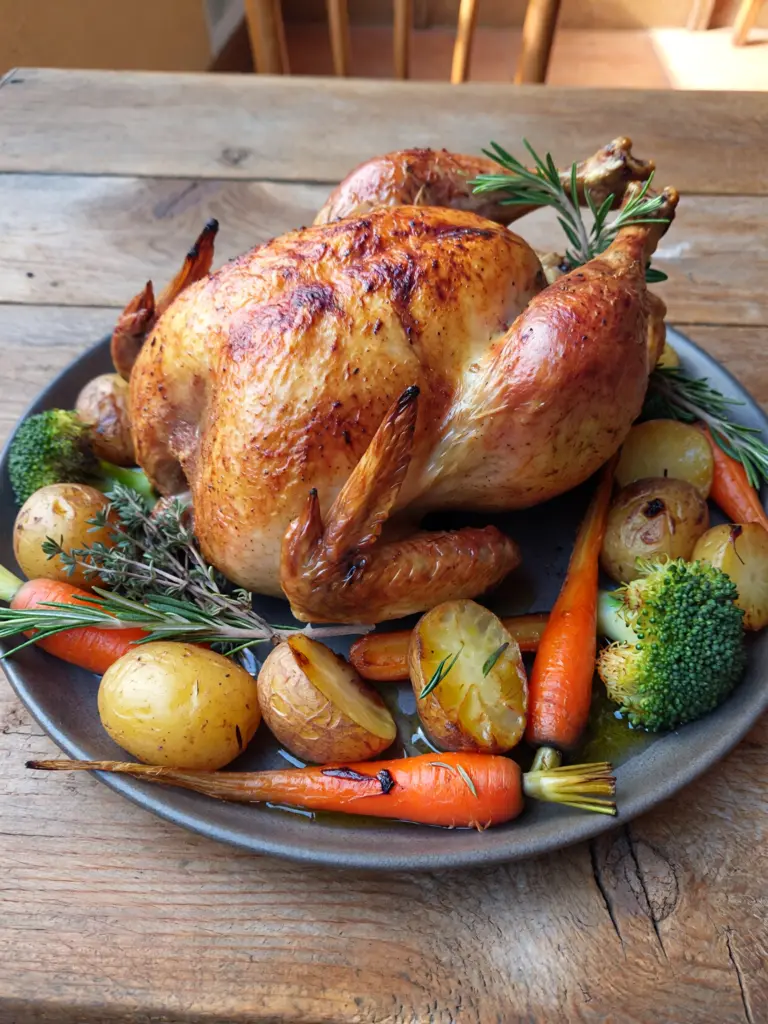
Serve directly from the pan at the table for a rustic, beautiful family-style presentation. Each person receives a piece of chicken and a generous scoop of the caramelized vegetables, with lemon wedges on the side for additional brightness. The pan juices — the accumulated chicken fat, caramelized vegetable sugars, and herb-seasoned oil — should be spooned over each serving as a natural, richly flavored sauce.
Nutritional Information
Based on one serving — one bone-in chicken thigh with an even share of the roasted vegetables, using olive oil and the full spice blend:
| Nutrient | Amount Per Serving |
|---|---|
| Calories | ~480 kcal |
| Protein | 36g |
| Total Fat | 22g |
| Saturated Fat | 5g |
| Carbohydrates | 32g |
| Fiber | 6g |
| Sugars | 7g |
| Sodium | 720mg |
| Calcium | 75mg |
| Iron | 3.2mg |
| Vitamin C | 88mg |
| Vitamin A | 3,200 IU |
| Potassium | 920mg |
Nutritional Context: With 36 grams of protein and 6 grams of dietary fiber per serving, sheet pan chicken and vegetables is one of the most nutritionally complete single-dish dinners in home cooking — delivering meaningful quantities of complete protein, fiber, vitamins A and C, potassium, and iron in a single pan. The bell peppers alone provide over 100% of the recommended daily vitamin C intake. The olive oil provides heart-healthy monounsaturated fats. At 480 calories for a genuinely filling dinner with protein, starch, and multiple vegetables, this is one of the most calorie-efficient satisfying meals available to a home cook.
Healthier Alternatives for the Recipe
Sheet pan chicken and vegetables is already among the most nutritionally balanced weeknight dinners available. These modifications optimize it further without sacrificing the simplicity and flavor that make it indispensable.
Reduce the Fat: Use boneless, skinless chicken breasts or tenderloins in place of bone-in skin-on thighs and reduce the olive oil to 1 tablespoon for the chicken and 2 tablespoons for the vegetables, applying it with a brush or spray for maximum coverage with minimum quantity. Per-serving fat reduction: approximately 8–10 grams.
Increase the Fiber and Micronutrients: Replace the baby potatoes with sweet potatoes — they contain significantly more vitamin A, potassium, and fiber than white potatoes and have a lower glycemic index. Add 1 cup of halved Brussels sprouts to the vegetable mixture — they are among the most nutrient-dense vegetables available and caramelize beautifully at 425°F.
Add More Vegetables, Less Starch: Reduce the potato quantity by half and double the bell peppers and zucchini. This shifts the carbohydrate composition toward more fibrous, lower-glycemic vegetables while keeping the overall portion size generous and satisfying.
Mediterranean Variation for Heart Health: Replace the smoked paprika and cayenne with za’atar seasoning on the chicken, add a cup of cherry tomatoes and a handful of olives to the vegetable mix for the final 10 minutes of roasting, and finish with crumbled feta, fresh mint, and a drizzle of high-quality extra virgin olive oil. The Mediterranean dietary pattern is consistently ranked among the most heart-healthy eating approaches in the world according to research from the New England Journal of Medicine.
Lower Sodium: Reduce the salt in both the chicken seasoning and the vegetable seasoning by half and compensate with additional lemon juice, lemon zest, and fresh herbs at the finish. Acid is one of the most powerful flavor enhancers available — it makes food taste more seasoned without contributing sodium.
Serving Suggestions
Sheet pan chicken and vegetables is a complete meal in itself, but these additions and presentations make it even more memorable.
Straight From the Pan: Serve the pan directly at the table on a trivet — the rustic, abundant visual of a full sheet pan arriving at the dinner table is genuinely appetizing and creates an immediate sense of generosity and warmth. A warm baguette or crusty bread on the side for soaking up the pan juices completes the picture perfectly.
Over Grains: Serve the chicken and vegetables over a bed of fluffy couscous, steamed white rice, or herbed quinoa. The grains absorb the pan juices and olive oil that accumulate around the vegetables, creating a natural sauce that ties everything together and extends the meal considerably further.
With a Simple Green Salad: A crisp green salad dressed with lemon vinaigrette served alongside provides freshness and acidity that cuts beautifully through the richness of the roasted chicken. The temperature contrast between the warm pan dinner and the cold, crisp salad is particularly pleasant.
With Tzatziki or Garlic Yogurt Sauce: A small bowl of thick Greek yogurt seasoned with garlic, lemon, cucumber, and dill alongside the chicken creates a Mediterranean-inspired meal that is fresh, cooling, and deeply satisfying. The cool yogurt sauce against the hot, spiced chicken is a combination of enduring appeal.
Family Style for Entertaining: For dinner parties of 6–8, double the recipe across two sheet pans and roast simultaneously on the upper and lower oven racks, rotating the pans at the 20-minute mark. Arrange everything on a large wooden carving board or a wide serving platter, scatter with herbs and lemon wedges, and bring to the table whole. It is one of the most impressive and effortless entertaining presentations available.
As Meal Prep: Roast a full batch on Sunday and portion the chicken and vegetables into individual containers with a scoop of cooked grains. Refrigerate for up to 4 days. Each container provides a complete, nutritionally balanced lunch or dinner that reheats in 90 seconds and is vastly superior in flavor and nutrition to any takeout alternative.
Common Mistakes to Avoid
These are the specific errors that most frequently prevent a sheet pan dinner from reaching its considerable potential.
Not drying the chicken skin: This is the most impactful single error in the entire recipe. Wet skin steams rather than roasts, producing pale, soft, rubbery skin that is deeply disappointing against the expectation of something crispy and golden. Pat the chicken completely dry — thoroughly, with multiple paper towels — every single time before seasoning.
Not preheating the sheet pan: Cold pan, steamed vegetables, pale chicken skin. Hot pan, caramelized vegetables, golden chicken. Preheating takes 10 minutes and requires no additional effort beyond placing the pan in the oven while it comes to temperature. It is the simplest and most impactful technique in sheet pan cooking.
Overcrowding the pan: This is sheet pan cooking’s most fundamental rule, violated constantly. Vegetables touching each other trap moisture and steam. Vegetables with space around them roast and caramelize. If the pan looks crowded, use two pans. There is no workaround.
Adding all vegetables at the same time: Dense root vegetables like potatoes and carrots require 35–40 minutes at 425°F. Delicate vegetables like zucchini and bell peppers require 15–20 minutes. Adding them simultaneously produces either undercooked potatoes or overcooked zucchini — or both. The staggered addition described in this recipe is not optional.
Using boneless, skinless chicken breasts without adjusting the cook time: Bone-in thighs take 38–42 minutes at 425°F. Boneless breasts take 20–25 minutes depending on their thickness. Roasting them on the same timeline produces either overcooked breasts or undercooked thighs. If using breasts, add them to the pan 15–18 minutes after the vegetables and thighs would start, or use a thermometer and remove them the moment they reach 165°F.
Skipping the lemon finish: The lemon juice squeezed over the finished pan is not decorative. It is a flavor transformation — the acid brightens every roasted element simultaneously, adds perceived freshness to a dish that has been in a hot oven for 40 minutes, and cuts through the richness of the chicken fat and olive oil. Without it, the dish is good. With it, the dish is great.
Storing Tips for the Recipe
Refrigerating: Allow the chicken and vegetables to cool to room temperature before transferring to airtight containers. Store in the refrigerator for up to 4 days. The vegetables continue to absorb the seasoned pan juices as they sit, and many people find day-two sheet pan chicken and vegetables even more flavorful than fresh from the oven.
Reheating the Chicken: For the crispiest reheated skin, place the chicken pieces skin-side up on a wire rack set over a baking sheet and reheat in a 375°F oven for 12–15 minutes. The elevated rack allows air to circulate beneath the skin, helping it regain crispiness rather than steaming against a flat surface. The microwave is faster but produces soft, rubbery skin — acceptable for tucking into a salad or wrap but a poor substitute for the original texture.
Reheating the Vegetables: Spread leftovers in a single layer on a baking sheet and reheat at 400°F for 8–10 minutes. The dry oven heat re-crisps the caramelized edges and warms through without making the vegetables soggy. The air fryer at 375°F for 5–6 minutes is an even more effective and efficient method.
Repurposing Leftovers: Leftover sheet pan chicken and vegetables are extraordinarily versatile. Shred the chicken meat from the bone and toss with the chopped vegetables for a grain bowl, a wrap filling, a pasta topping, or a frittata filling. The caramelized vegetables alone make an excellent pizza topping, sandwich filling, or pasta sauce base when roughly chopped and warmed with a splash of broth.
Freezing: Cooked chicken freezes well for up to 3 months. The vegetables do not freeze particularly well — their texture degrades significantly upon thawing. Freeze the chicken separately and make fresh vegetables when reheating. Thaw chicken overnight in the refrigerator and reheat as described above.
Meal Prep Strategy: Season the chicken up to 24 hours in advance and store uncovered on a rack in the refrigerator — this dry brining technique simultaneously flavors the meat deeply and dries the skin for maximum crispiness with zero additional effort on the night of cooking. Cut all vegetables up to 2 days in advance and store in airtight containers in the refrigerator. With pre-seasoned chicken and pre-cut vegetables, the entire meal goes from refrigerator to oven in under 5 minutes.
Conclusion
Sheet pan chicken and vegetables earns its place as one of the truly great weeknight dinners not through novelty or complexity but through consistent, reliable excellence. Golden, crispy-skinned chicken. Caramelized, tender vegetables. One pan. Minimal cleanup. Complete nutrition. Forty-five minutes from refrigerator to table.
The technique is straightforward. The results are spectacular. And once you have internalized the core principles — dry the chicken, preheat the pan, do not crowd the vegetables, stagger the cooking times, finish with lemon — you will find that this recipe is less a fixed formula than a framework that accommodates nearly any combination of chicken cuts and seasonal vegetables you want to put on a pan.
Make it this week. Make it differently the week after. Try the Mediterranean variation, then the sweet potato version, then whatever vegetables need using in your refrigerator. This recipe rewards flexibility and experimentation in equal measure with every pan.
Share your combination in the comments below — what vegetables did you use, what seasoning profile did you choose, and how did it turn out? And if this recipe has earned a permanent place in your rotation, explore our [Honey Garlic Sheet Pan Salmon with Asparagus], [Sheet Pan Sausage and Peppers], and [Za’atar Roasted Chicken Thighs with Chickpeas and Tomatoes] for more one-pan dinners that deliver restaurant-quality results with weeknight-friendly effort.
FAQs
Q: Should I use bone-in or boneless chicken for sheet pan cooking? Bone-in, skin-on chicken thighs are the recommended choice for sheet pan cooking for three reasons. The bone acts as a natural heat conductor that promotes even cooking from the inside out, preventing the overcooking at the edges that boneless pieces are susceptible to. The skin crisps beautifully at high heat, providing the textural contrast that makes sheet pan chicken so satisfying. And the higher fat content of thighs compared to breasts means a longer window of safe cooking time — they remain juicy even if left in the oven a few minutes longer than strictly necessary. Boneless skinless breasts work but require closer attention and a shorter cooking time.
Q: My vegetables always turn out soggy. What am I doing wrong? Virtually always, soggy vegetables are the result of overcrowding. When vegetables are packed tightly together on a pan, the moisture they release during cooking cannot evaporate — it pools around the vegetables and they essentially braise in their own liquid rather than roasting. The solution is simple: use a larger pan, use two pans, or cook fewer vegetables at once. Every piece needs visible space around it for steam to escape and hot air to circulate.
Q: Can I use chicken breasts instead of thighs? Yes, with two important adjustments. Pound boneless chicken breasts to an even ¾-inch thickness before seasoning — uneven thickness means some parts overcook before others reach safe temperature. Add the breasts to the pan 15 minutes after starting the vegetables, since they cook significantly faster than thighs. Use a thermometer and remove them the moment they reach 165°F — boneless chicken breasts go from perfectly done to dry and overcooked in as little as 3–4 minutes.
Q: What temperature is best for sheet pan chicken? 425°F (220°C) is the optimal temperature for sheet pan chicken with vegetables. It is high enough to crisp the chicken skin and caramelize the vegetables, but not so high that the exterior scorches before the interior cooks through. Some recipes call for 400°F — this works but produces noticeably less browning and takes 5–8 additional minutes. Temperatures above 450°F risk burning the skin before the thighs reach 165°F internally.
Q: How do I know when the chicken is done without a thermometer? A thermometer is strongly recommended and removes all guesswork — bone-in chicken thighs are done at 165°F, though many chefs prefer 175–180°F for maximum tenderness and the collagen breakdown that makes dark meat so satisfying. Without a thermometer, pierce the thickest part of the thigh at the bone — the juices should run completely clear with no pink tinge. The meat should pull away from the bone easily when tugged gently with a fork. That said, a $10 instant-read thermometer is among the highest-value kitchen tools available and eliminates this uncertainty entirely.
Q: Can I add sauce or marinade to the sheet pan? Yes, with one caveat: highly sugary sauces like honey-based glazes, teriyaki, or BBQ sauce should only be applied in the final 10–12 minutes of roasting. The sugars in these sauces caramelize quickly at 425°F and will burn if exposed to the full roasting time. For herb-based or olive oil-based sauces, apply before roasting as part of the seasoning. For a beautiful honey-garlic glaze, brush it on in the last 10 minutes and return the pan to the oven — the sugars will caramelize into a lacquered, glossy coating without burning.
Q: How do I make this recipe for a larger group? Scale the recipe across multiple sheet pans rather than cramping everything onto one. Two pans of four thighs each feed eight people comfortably. Position one pan on the upper third rack and one on the lower third, and rotate them at the 20-minute mark for even cooking. With a third pan, add a middle rack and rotate all three pans at the halfway point. Most home ovens accommodate two sheet pans simultaneously without issue — three pans may require extending the cooking time by 5 minutes due to the increased thermal mass slowing the oven’s recovery time.
Sheet Pan Chicken & Vegetables
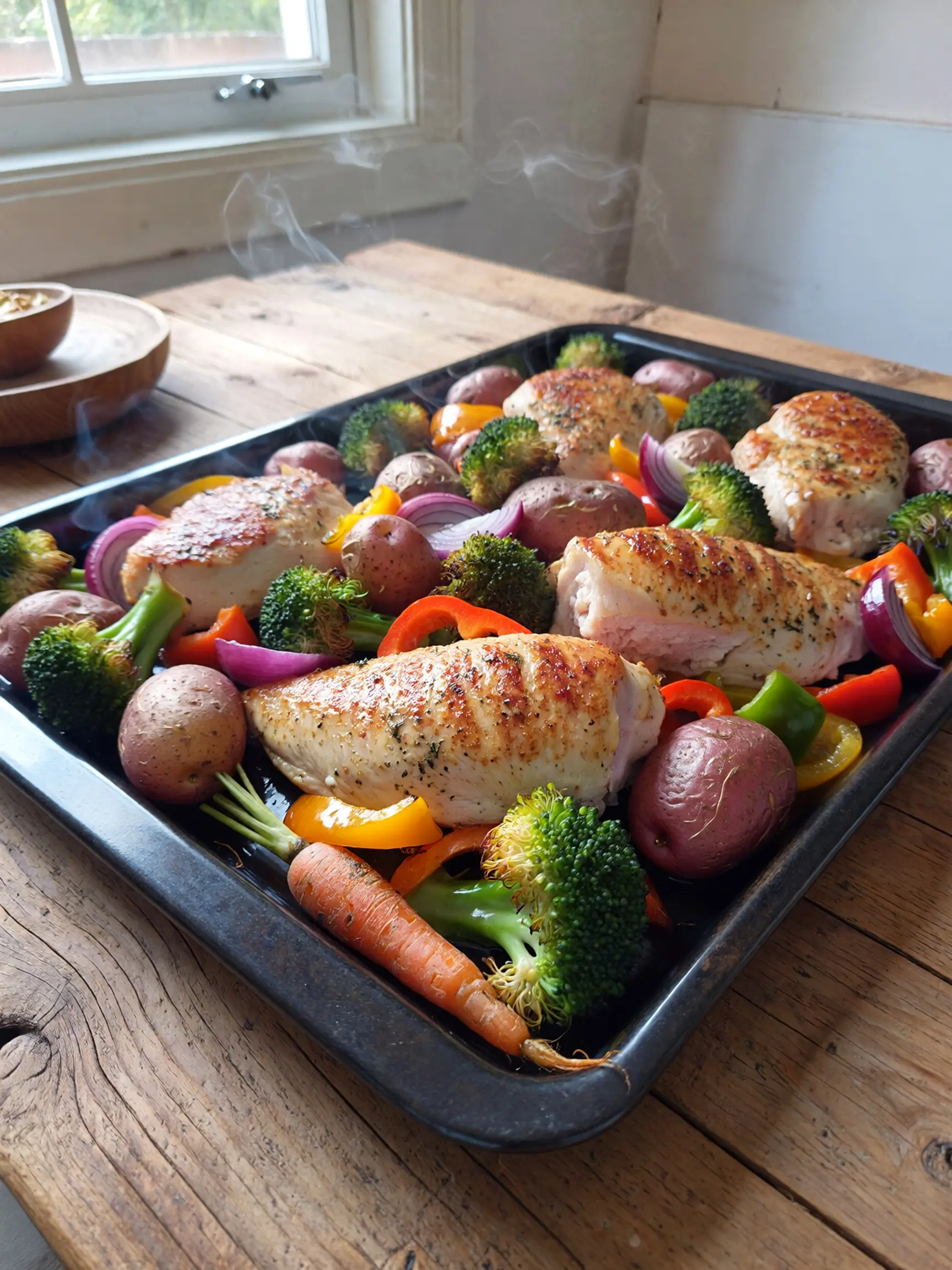
A simple and healthy sheet pan meal that combines juicy chicken with vibrant vegetables, all roasted to perfection.
Ingredients
- 4 boneless, skinless chicken breasts
- 2 cups broccoli florets
- 2 cups baby carrots
- 2 tablespoons olive oil
- 1 teaspoon garlic powder
- 1 teaspoon paprika
- Salt and pepper to taste
Instructions
- Preheat the oven to 400°F (200°C).
- In a large bowl, combine olive oil, garlic powder, paprika, salt, and pepper.
- Add the chicken breasts and toss to coat.
- Place the chicken on a large sheet pan and arrange the broccoli and carrots around it.
- Drizzle the remaining olive oil mixture over the vegetables.
- Bake for 25-35 minutes, or until the chicken is cooked through and vegetables are tender.
- Let rest for a few minutes before serving.
Nutrition Information
- Calories: 350 kcal
- Cholesterol: 100 mg
- Sodium: 300 mg
- Carbohydrates: 25 g
- Fiber: 5 g
- Sugar: 4 g
- Protein: 30 g