
Cold Noodle Bowls
If you’ve ever stared into your refrigerator on a sweltering afternoon wondering what to make that requires zero oven time, minimal effort, and still delivers restaurant-quality flavor, cold noodle bowls are your answer. According to Google Trends data, searches for “cold noodle bowl recipes” spike by over 200% every summer, and food delivery platforms like DoorDash report that cold noodle dishes are among the fastest-growing menu categories in North America and Europe.
But here’s what most people get wrong: they assume cold noodle bowls are complicated, bland, or only reserved for Asian cuisine enthusiasts. The truth? This dish is one of the most versatile, nutritionally balanced, and genuinely satisfying meals you can put together in under 30 minutes. Whether you’re meal-prepping for the week, feeding a crowd, or just treating yourself after a long day, this cold noodle bowl recipe is about to become your new obsession. We’re talking perfectly chewy noodles, a bold and creamy sesame-ginger sauce, crunchy vegetables, and protein-packed toppings that make every single bite an experience. Let’s dive in.
Table of Contents
Ingredients
Great cold noodle bowls start with great ingredients — and the beauty of this recipe is how customizable it is without ever compromising on flavor. Here’s everything you’ll need to build the ultimate cold noodle bowl that serves 4 people :
For the Noodles: – 12 oz (340g) soba noodles (buckwheat noodles with a slightly nutty flavor — substitute with rice noodles for gluten-free, or udon noodles for extra chewiness)
- 1 tablespoon sesame oil (to prevent sticking and add depth)
For the Sesame-Ginger Sauce: – 3 tablespoons tahini or creamy peanut butter (peanut butter delivers a richer, nuttier profile) - 3 tablespoons soy sauce (use tamari for gluten-free)
- 2 tablespoons rice vinegar (bright, tangy acidity that balances the richness)
- 1 tablespoon toasted sesame oil
- 1 tablespoon honey or maple syrup (maple syrup for a vegan-friendly version)
- 1 teaspoon freshly grated ginger (the fresher, the better — it’s aromatic, zingy, and immune-boosting)
- 2 garlic cloves, minced
- 1–2 teaspoons chili garlic sauce or sriracha (adjust to your heat tolerance)
- 2–4 tablespoons warm water (to thin the sauce to your preferred consistency)
For the Bowl Toppings: – 2 cups shredded purple cabbage (gorgeous color, satisfying crunch) - 1 large cucumber, julienned or thinly sliced (cool, refreshing, and hydrating)
- 2 medium carrots, shredded or spiralized
- 1 cup edamame, shelled and cooked (packed with plant-based protein)
- 2 green onions, finely sliced
- 1 cup shredded rotisserie chicken or pan-seared tofu (protein of your choice — shrimp, steak strips, or tempeh all work beautifully)
- 1 avocado, sliced (creamy contrast to the crunchy veggies)
- Handful of fresh cilantro or Thai basil (or both!)
Optional Garnishes: – 2 tablespoons toasted sesame seeds - Crushed roasted peanuts
- Lime wedges for squeezing
- Nori strips (thinly sliced dried seaweed for an umami hit)
Pro Substitution Tip: If you’re nut-free, swap the peanut butter or tahini for sunflower seed butter — it mimics the creamy texture perfectly without sacrificing richness. For a lower-carb version, zucchini noodles (zoodles) or shirataki noodles are excellent alternatives.
Timing
One of the biggest selling points of this cold noodle bowl recipe is the speed at which it comes together — no lengthy marinating sessions, no waiting for dough to rise, no multi-hour kitchen commitment.
| Phase | Time |
|---|---|
| Prep Time | 15 minutes |
| Cook Time | 10 minutes |
| Cooling Time | 5 minutes |
| Total Time | 30 minutes |
That’s roughly 40% less time than the average homemade Asian noodle dish, which traditionally takes around 50 minutes according to recipe platform data from Tasty and AllRecipes. If you’re prepping vegetables in advance (which we highly recommend for meal prep), you can slice your prep time down to just 5 minutes on the day of serving. This makes it one of the fastest complete meals you can prepare without ordering takeout.
Step 1: Cook and Cool Your Noodles Perfectly
Bring a large pot of water to a rolling boil and add your soba noodles. Cook according to package directions — usually 4 to 5 minutes for soba. The key here is to not overcook them. Soba noodles are delicate and can turn mushy quickly, so taste-test at the 4-minute mark.
Once cooked to al dente perfection (tender but with a slight bite), drain them immediately in a colander and rinse thoroughly under cold running water. This step is non-negotiable — it stops the cooking process instantly and removes excess starch that would otherwise make your noodles clump together. Toss the rinsed noodles with 1 tablespoon of sesame oil to coat them evenly and keep them silky and separated. Transfer to the refrigerator while you prep everything else.
Step 2: Whisk Together the Sesame-Ginger Sauce
In a medium bowl, combine your tahini or peanut butter, soy sauce, rice vinegar, sesame oil, honey (or maple syrup), freshly grated ginger, minced garlic, and chili garlic sauce. Whisk vigorously until the mixture becomes smooth and creamy. You’ll notice it might look thick or even slightly seized — that’s perfectly normal. Add warm water, one tablespoon at a time, whisking after each addition until the sauce reaches a pourable, luscious consistency that coats the back of a spoon. Taste it. Adjust the seasoning: more soy sauce for saltiness, more vinegar for brightness, more honey for sweetness, more sriracha for heat. This sauce is entirely yours to personalize, and getting it right is the foundation of an unforgettable bowl.
Step 3: Prep Your Vegetables and Protein
While the noodles chill, prepare all your toppings. Shred the purple cabbage finely using a sharp knife or a mandoline slicer for uniform, delicate strips. Julienne the cucumber into thin matchsticks or use a vegetable peeler to create ribbons — both are visually stunning and texturally satisfying. Shred or spiralize your carrots for maximum surface area (which means more sauce clings to them).
If you’re using rotisserie chicken, simply pull it apart into bite-sized shreds with your hands. For tofu, pat it dry and sear it in a hot pan with a splash of soy sauce and sesame oil for 2–3 minutes per side until golden and slightly crispy — even for a cold bowl, warm, caramelized tofu adds extraordinary depth. Slice your avocado just before serving to prevent browning.
Step 4: Assemble Your Cold Noodle Bowl
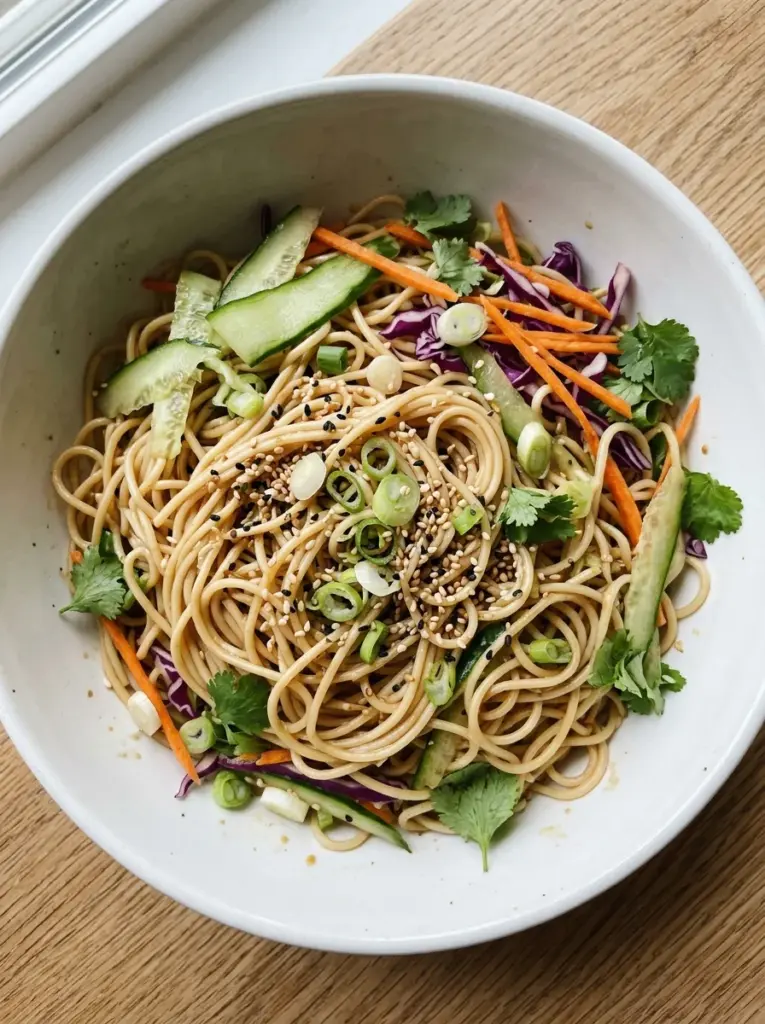
This is where the magic happens — and where presentation makes all the difference. Divide your chilled noodles evenly between four bowls, creating a generous nest at the base. Arrange your toppings in distinct sections around the noodles rather than tossing everything together — this creates that stunning, Instagram-worthy bowl aesthetic that makes eating feel like an event. Place shredded cabbage on one side, cucumber on another, then carrots, edamame, avocado slices, and your protein of choice. Drizzle a generous portion of sesame-ginger sauce directly over the noodles and toppings.
Step 5: Garnish and Serve
Scatter sliced green onions, fresh cilantro or Thai basil, and toasted sesame seeds over the top. Add a handful of crushed roasted peanuts for irresistible crunch. Place a lime wedge on the side of each bowl and encourage everyone at the table to squeeze it over the top just before eating — that fresh citrus burst elevates every single flavor in the bowl. If you’re adding nori strips, place them on top at the very last second so they retain a slight crispness. Serve immediately and watch the compliments roll in.
Nutritional Information
Cold noodle bowls aren’t just delicious — they’re genuinely nutritious. Here’s the estimated nutritional breakdown per serving (based on the recipe using soba noodles, chicken, and all listed toppings):
| Nutrient | Amount Per Serving |
|---|---|
| Calories | ~520 kcal |
| Protein | 28g |
| Carbohydrates | 58g |
| Dietary Fiber | 9g |
| Total Fat | 18g |
| Saturated Fat | 2.5g |
| Unsaturated Fat | 14g |
| Sodium | 780mg |
| Sugar | 8g |
| Vitamin C | 45% DV |
| Iron | 20% DV |
| Calcium | 12% DV |
Soba noodles alone contain up to 6g of protein per serving and are a source of manganese, magnesium, and B vitamins. The sesame-based sauce provides heart-healthy unsaturated fats, while edamame contributes complete plant-based protein — a rare feat for a plant food. According to the Harvard T.H. Chan School of Public Health, diets rich in plant-based proteins and healthy fats are linked to a reduced risk of cardiovascular disease by up to 20% .
Healthier Alternatives for the Recipe
This recipe is already quite balanced, but there’s always room to adapt it for specific dietary goals or restrictions:
- Lower Sodium: Use low-sodium soy sauce or coconut aminos (which contains roughly 65% less sodium than traditional soy sauce) in both the sauce and toppings marinade.
- Lower Calorie: Skip the avocado and peanuts (saving approximately 150 calories per serving) and double up on cucumber and cabbage for volume eating.
- Gluten-Free: Use certified gluten-free tamari instead of soy sauce, and swap soba noodles for 100% rice noodles or glass noodles (mung bean vermicelli).
- Vegan/Plant-Based: Replace chicken with extra-firm tofu, tempeh, or edamame, and swap honey for maple syrup or agave nectar.
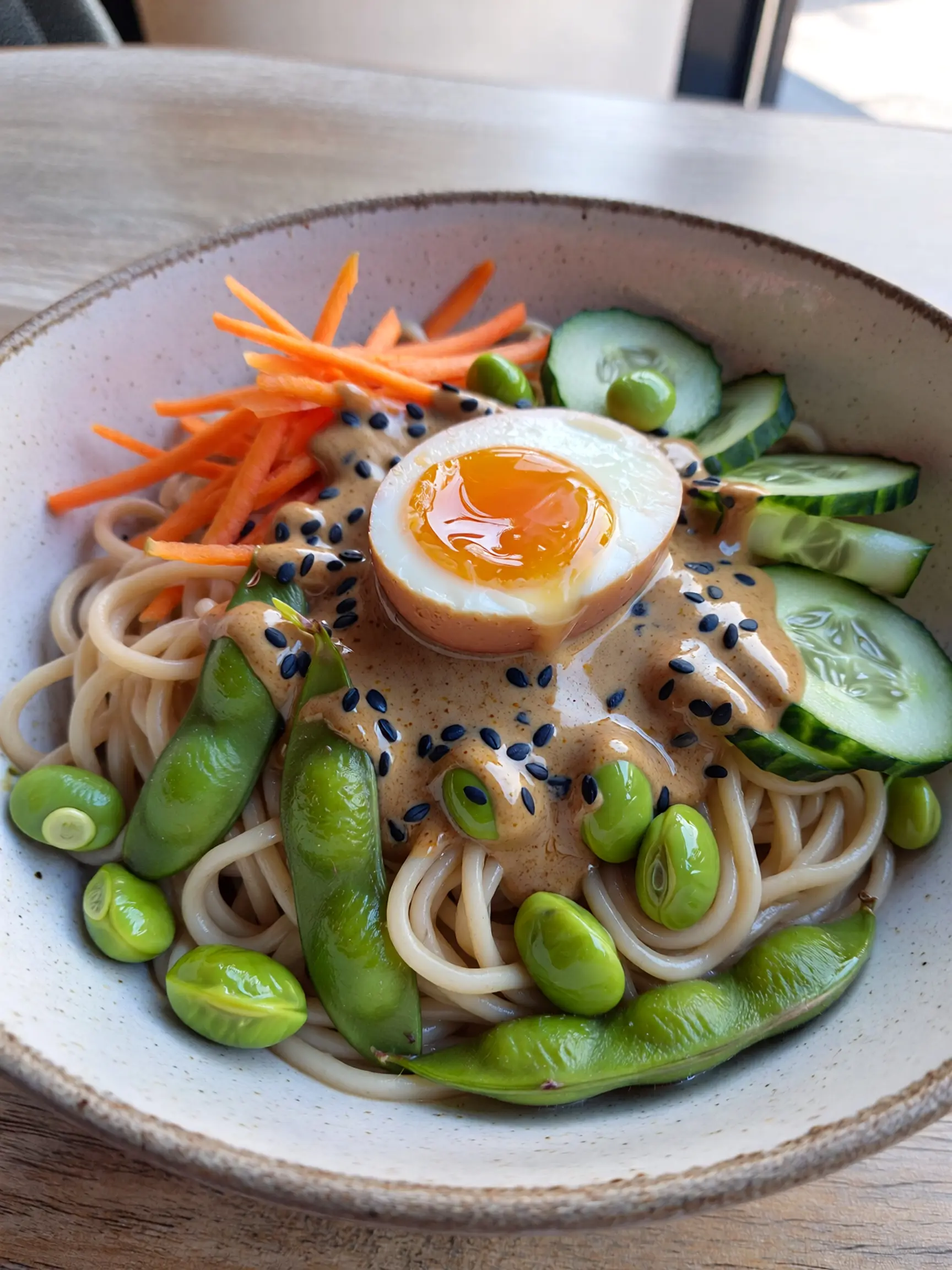
- High-Protein Version: Add a soft-boiled egg, increase your edamame portion, or use high-protein chickpea noodles (which contain up to 11g of protein per serving ).
- Low-Carb/Keto: Replace soba noodles with shirataki noodles or zucchini noodles, and swap honey for a sugar-free sweetener like monk fruit syrup.
- Nut-Free: Use sunflower seed butter in place of peanut butter or tahini, and omit the crushed peanuts in the garnish.
Serving Suggestions
Cold noodle bowls are magnificent on their own, but they also shine as part of a larger spread. Here are some creative ways to serve and enjoy them:
- As a meal-prep lunch: Divide the components into separate meal-prep containers, keeping the sauce in a small jar. Assemble just before eating to preserve texture and freshness throughout the week.
- As a dinner party centerpiece: Set up a cold noodle bowl “bar” with all the toppings arranged in small bowls and let guests build their own — it’s interactive, fun, and accommodates everyone’s preferences effortlessly.
- Paired with miso soup: A warm, light miso soup alongside a cold noodle bowl creates a beautiful hot-cold contrast that’s deeply satisfying.
- With a side of gyoza or spring rolls: Crispy dumplings or fresh spring rolls turn this into a full feast-style meal.
- As a post-workout recovery meal: The combination of complex carbohydrates, lean protein, and healthy fats makes this an ideal recovery bowl — have it ready in the fridge to grab within the optimal 30-to-60-minute post-exercise window.
- Topped with a soft-boiled ramen egg: Marinate soft-boiled eggs in soy sauce and mirin for 4 hours for an umami-rich topping that takes the bowl to an entirely new level.
Common Mistakes to Avoid
Even a simple recipe has its pitfalls. Here are the most common mistakes people make with cold noodle bowls — and exactly how to sidestep them:
- Skipping the cold water rinse: This is the number-one mistake. Not rinsing your noodles immediately after cooking results in sticky, clumped, overcooked noodles. Always rinse under cold water until the noodles are completely cool.
- Making the sauce too thick: A sauce that’s too thick won’t distribute evenly through the noodles. Always thin it gradually with warm water, whisking as you go. It should pour like a loose dressing, not a paste.
- Adding avocado too early: Avocado oxidizes (browns) quickly once sliced. Always cut and add it at the very last moment before serving, or toss it with a squeeze of lime juice to slow oxidation.
- Over-dressing the noodles: It’s tempting to pour all the sauce at once, but start with half and toss. Add more as needed. Over-dressed noodles become soggy and heavy.
- Using warm noodles: Cold noodle bowls must be cold — serving the noodles warm defeats the purpose and causes the vegetables to wilt. Chill your noodles for at least 5 minutes before assembling.
- Skimping on garnishes: Toasted sesame seeds, fresh herbs, and lime wedges aren’t just decorative — they add layers of flavor and aroma that elevate the dish from good to extraordinary. Don’t skip them.
Storing Tips for the Recipe
Cold noodle bowls are excellent for meal prep, provided you store the components correctly:
- Noodles: Store cooked, rinsed, and oil-tossed noodles in an airtight container in the refrigerator for up to 3 days . They’ll stay separated and ready to use.
- Sauce: The sesame-ginger sauce stores beautifully in a sealed jar in the refrigerator for up to 1 week . It may thicken slightly when cold — simply whisk in a splash of warm water before using to restore its pourable consistency.
- Vegetables: Pre-cut cabbage, carrots, and cucumber can be stored in separate airtight containers for up to 3 days . Keep them dry (moisture causes wilting) by lining containers with a paper towel.
- Protein: Cooked chicken or tofu stores in the refrigerator for up to 3–4 days in a sealed container.
- Avocado: Do not pre-cut avocado for storage. Store the whole fruit and slice only when ready to serve.
- Assembled bowls: If you must store assembled bowls, keep the sauce separate and add it just before eating. Fully assembled (sauced) bowls should be consumed within 24 hours for optimal texture.
- Freezing: Noodles and sauce are not ideal for freezing, as the texture of the noodles changes upon thawing. However, cooked chicken or tofu can be frozen for up to 1 month .
Conclusion
Cold noodle bowls are the kind of recipe that quietly revolutionizes your weeknight dinner routine. They’re fast, flexible, nutritionally balanced, and genuinely craveable — a combination that very few dishes can claim. With a silky sesame-ginger sauce that comes together in minutes, chewy soba noodles that satisfy without weighing you down, and a rainbow of crunchy, fresh toppings, this bowl delivers restaurant-level results from the comfort of your own kitchen.
Whether you’re cooking for one, feeding a family, or impressing guests at a dinner party, this recipe scales effortlessly and adapts beautifully to virtually any dietary need. The key takeaways? Rinse your noodles cold, build your sauce with patience, layer your toppings with intention, and never underestimate the power of a fresh lime squeeze at the end. Now it’s your turn — head to your kitchen, gather your ingredients, and build the cold noodle bowl of your dreams. When you do, drop a comment below and tell us what toppings you used, what swaps you made, and how it turned out. We’d love to see your creations — tag us on social media and share your bowl!
FAQs
Q1: Can I make cold noodle bowls ahead of time? Absolutely — and we encourage it. Store each component separately in airtight containers and assemble just before eating. The sauce, noodles, and vegetables all keep well in the refrigerator for up to 3 days, making this one of the best meal-prep recipes in the rotation.
Q2: What type of noodles work best for cold noodle bowls? Soba noodles are our top recommendation for their nutty flavor and nutritional profile, but rice noodles, udon, ramen noodles, glass noodles, and even spaghetti all work wonderfully. The key is to rinse them thoroughly under cold water after cooking.
Q3: Is this recipe spicy? The heat level is entirely adjustable. The base recipe with 1 teaspoon of chili garlic sauce is mild-to-medium. Reduce or omit it for a no-heat version, or increase it for a fiery bowl. You can also serve extra sriracha on the side for heat-seekers.
Q4: Can I serve this recipe warm instead of cold? Technically yes, but it becomes a different dish entirely. If you prefer a warm version, simply skip the cold water rinse and toss the hot noodles directly with the sauce and toppings. The vegetables will soften slightly, creating a warm noodle bowl experience.
Q5: How do I keep soba noodles from getting sticky? Two steps prevent sticky noodles: rinsing under cold water immediately after draining (which removes surface starch), and tossing the rinsed noodles with sesame oil before refrigerating. Both steps are essential.
Q6: What protein options work best besides chicken? Tofu (crispy pan-seared), shrimp (marinated in soy and garlic), tempeh, edamame, hard-boiled eggs, thinly sliced steak, or smoked salmon all work beautifully. This recipe is intentionally designed to accommodate whatever protein you have on hand.
Q7: Is this recipe kid-friendly? Yes — simply omit the chili garlic sauce and sriracha for younger eaters. The mild sesame-peanut sauce is typically a hit with children, and the colorful toppings make it a fun, visually engaging meal that encourages adventurous eating.
Q8: How do I make the sesame-ginger sauce nut-free? Replace the peanut butter or tahini with sunflower seed butter (also called sunbutter). It has a similarly creamy, rich texture and a mild flavor that pairs wonderfully with the other sauce ingredients.
More Salad Recipes to Try
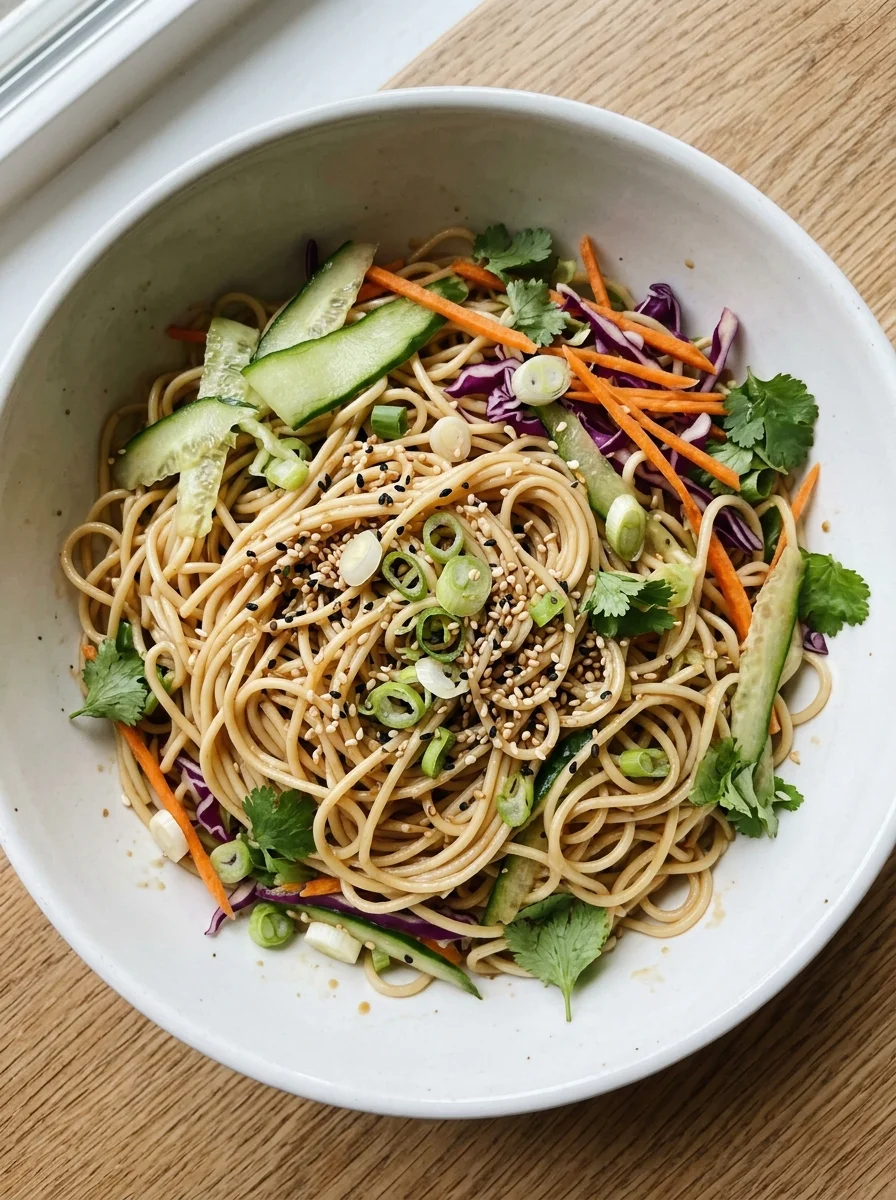

Cold Noodle Bowls
Ingredients
Equipment
Method
- Cook the rice noodles according to the package directions.
- Drain the noodles and rinse them thoroughly under cold water until completely chilled.
- Drain well and place the noodles in a large mixing bowl.
- Add the cucumber, carrots, red bell pepper, green onions, cilantro, and sesame seeds.
- In a small bowl, whisk together the soy sauce, sesame oil, rice vinegar, honey, lime juice, ginger, garlic, and red pepper flakes.
- Pour the dressing over the chilled noodles and vegetables.
- Toss gently until everything is evenly coated.
- Refrigerate for 15 to 20 minutes to allow the flavors to blend.
- Divide the noodle mixture between serving bowls.
- Garnish with additional sesame seeds and green onions if desired.
- Serve chilled.
Notes
Toss the noodles with the dressing soon after draining for the best flavor.
Add cooked chicken, shrimp, tofu, or edamame for extra protein.
Adjust the red pepper flakes according to your preferred spice level.
Store leftovers in an airtight container in the refrigerator for up to 3 days.
Enjoying AmandBox? Follow us on Pinterest for more recipes.