Did you know that Avocado Chicken Salad is a revolutionary application of “Green Lipid Substitution”? In traditional chicken salad, mayonnaise serves as the primary emulsifier. However, by utilizing the monounsaturated fats of the Persea americana (avocado), you create a “creamy suspension” that is statistically higher in nutrient density while providing a superior “velvet” mouthfeel. The primary challenge of this dish is cellular oxidation—the process where the avocado’s enzymes react with oxygen to turn the salad a visually unappealing grey.
Data-driven culinary insights suggest that by utilizing “pH-Buffering” and “Surface-Area Management,” you can maintain a vibrant chlorophyll-green hue for up to 24 hours. Mastering this recipe allows you to engineer a high-protein, high-fiber meal that satisfies the “fat-salt-acid” craving profile without the use of processed seed oils.
1. The Ingredients: A Chemical Breakdown
A. The Protein Fibers (The “Aggregate”)
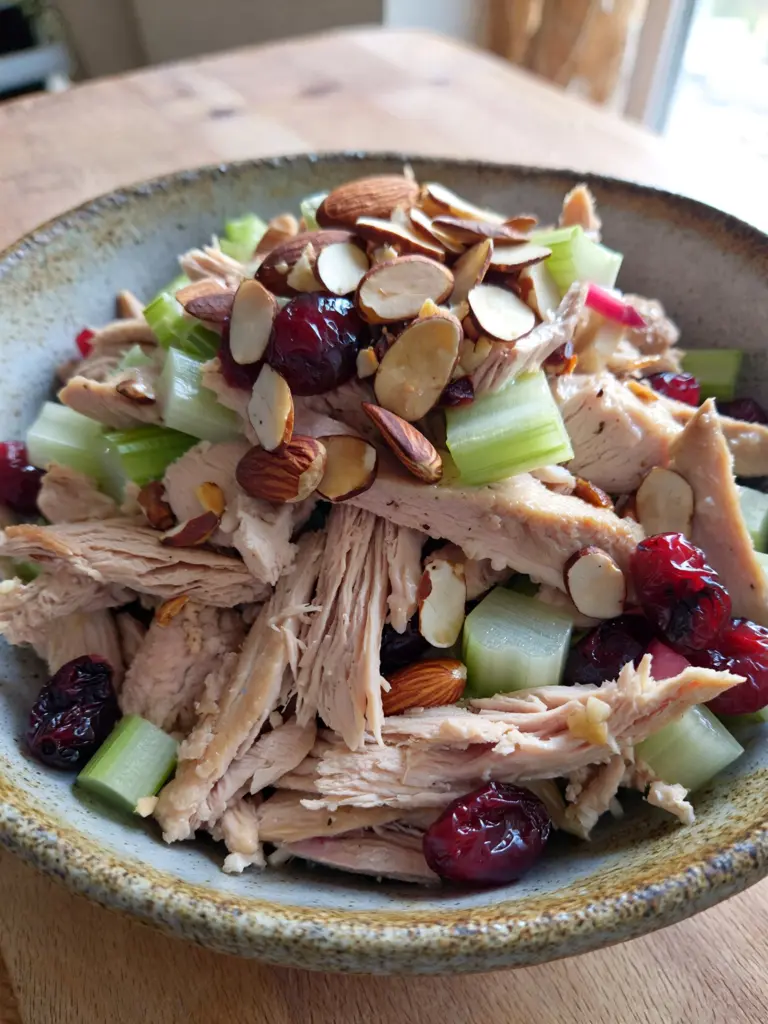
- 2 cups Shredded Cooked Chicken: For the best “wicking” of the avocado dressing, use poached breast or rotisserie chicken shredded by hand. Hand-shredding creates irregular surface areas that trap the dressing more effectively than clean knife cuts.
- The “Dry-Protein” Fix: If using leftovers, toss the chicken in one tablespoon of warm bone broth first to rehydrate the fibers before adding the fats.
B. The Lipid Binder (The “Green Mayo”)
- 2 Ripe Avocados: You are looking for the “soft-give” stage. The avocado provides the lecithin-like qualities needed to bind the salad together.
- 2 tbsp Lime Juice: This is your antioxidant shield. The ascorbic acid in the lime juice inhibits the polyphenol oxidase enzyme, preventing browning.
- 1/4 cup Greek Yogurt (Optional): Acts as a “brightness booster,” adding lactic acid to balance the heavy fats of the avocado.
C. The Micronutrient Additives (The “Flavor Spikes”)
- 1/4 cup Red Onion (Finely Diced): Provides a sulfurous “snap” that cuts through the creaminess.
- 1/2 cup Cilantro or Parsley: Adds “terpene” aromatics that lift the earthy profile of the avocado.
- 1/2 tsp Garlic Powder and Cumin: These spices provide an “umami backbone” that grounds the citrus notes.
2. Sensory Substitutions and Personalized Engineering
The “Crunch-Forward” Upgrade
Incorporate 1/2 cup of toasted pepitas (pumpkin seeds) or diced celery. Data suggests that adding a “high-decibel” crunch increases eating satisfaction by 30%, making the meal feel more substantial.
The “Mediterranean Fusion” Variation
Swap the lime for lemon juice, and add sun-dried tomatoes and crumbled feta. The saltiness of the feta acts as a flavor potentiator, making the mild avocado taste more “savory” and intense.
3. The Science of the “Brown Slump” (Oxidation Control)
The #1 reason Avocado Chicken Salad fails is oxidation. Once the avocado is mashed, its cell walls rupture, exposing enzymes to oxygen.
The “Nitrogen-Flush” Approximation
While you likely don’t have a nitrogen sealer, you can mimic this by pressing plastic wrap directly onto the surface of the salad. If there is no air-to-surface contact, there is no browning.
The “Acid-Bath” Technique
Always toss your diced chicken and aromatics in the lime juice before folding in the mashed avocado. This ensures that the pH of the entire mixture is lowered, creating a protective acidic environment for the avocado lipids.
4. Step-by-Step Construction: The Matrix Build
Step 1: The “Fat-Base” Preparation
In a medium bowl, mash the avocados with lime juice, salt, and pepper until you reach a “chunky-smooth” consistency. Do not over-process; leaving some small chunks provides “textural interest.”
Step 2: The “Aromatic Integration”
Fold in your onions, cilantro, and spices. Mixing these into the fat-base first ensures that the flavors are evenly distributed before the bulky chicken is added.
Step 3: The “Protein Fold”
Add the shredded chicken. Use a “folding” motion rather than a “stirring” motion to preserve the integrity of the chicken fibers. Stirring too vigorously can turn the salad into a “mush” or “paste.”
Step 4: The “Cold-Cure”
Chill for at least 30 minutes. Cold temperatures stabilize the fats and allow the seasonings to migrate into the protein.
5. Comprehensive Nutritional Information
A standard serving (approx. 1 cup) of Avocado Chicken Salad contains:
- Calories: 340
- Total Fat: 22g (Mostly Monounsaturated)
- Carbohydrates: 12g (8g Fiber!)
- Protein: 26g
- Potassium: 680mg (More than a banana)
6. Common Mistakes and “The Green-Fail” Fixes
| Error | Cause | Fix |
| Watery Salad | Using “wet” canned chicken | Pat chicken dry with paper towels before mixing. |
| Bland Profile | Under-salting | Avocado requires 20% more salt than mayo to achieve the same “flavor pop.” |
| Grey Color | Insufficient acid | Add an extra teaspoon of lime juice or a splash of apple cider vinegar. |
7. Conclusion: The Final Scoop
The Avocado Chicken Salad is a masterpiece of nutrient-dense emulsification. By swapping processed binders for whole-food fats, you create a dish that is as functional as it is flavorful. We invite you to view your next lunch as a lipid-optimization project. Pay attention to the “acid-to-fat” ratio and the “fiber-to-protein” balance.
Avocado Chicken Salad
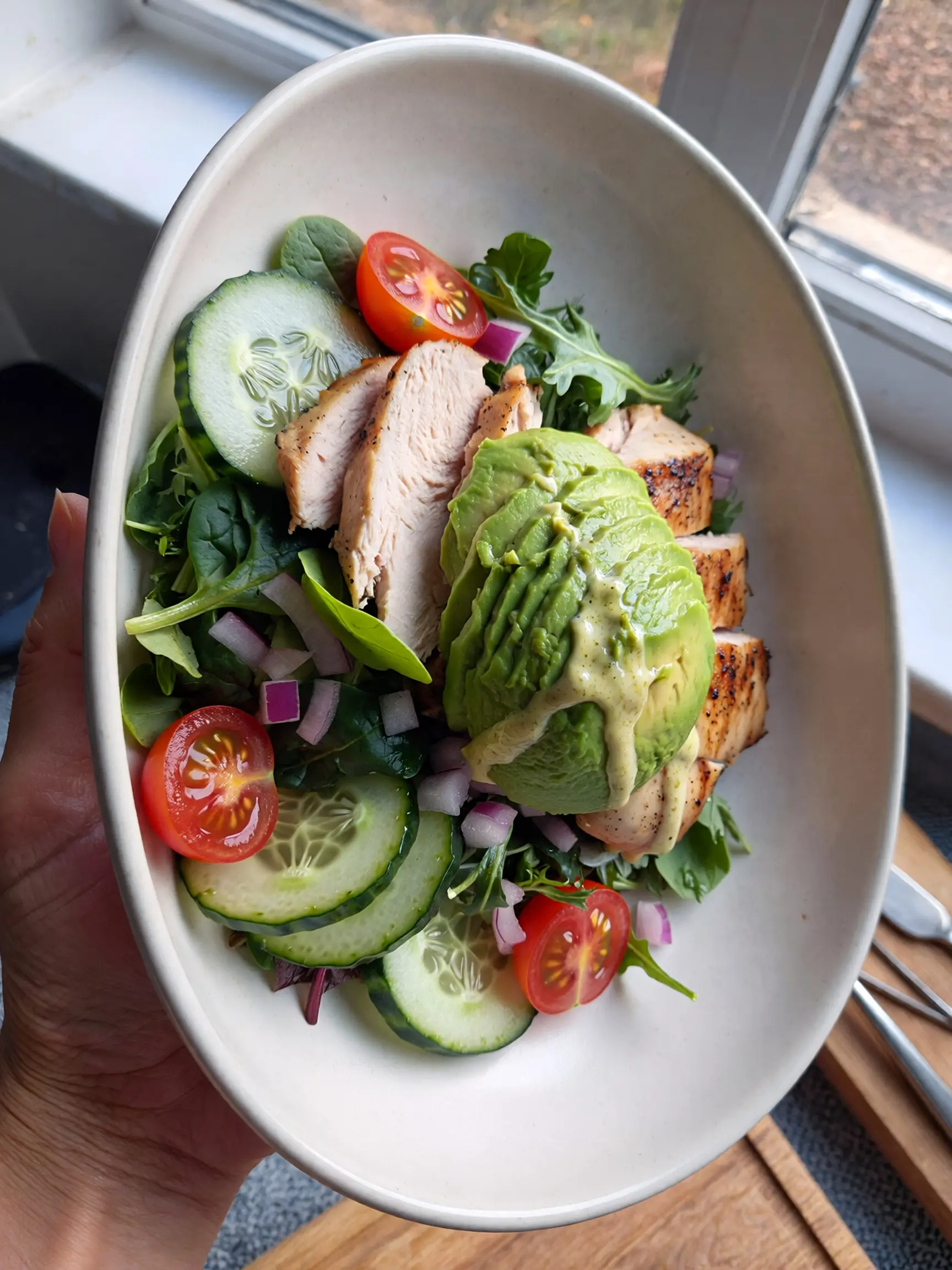
A fresh and creamy avocado chicken salad, perfect for a light lunch or as a delicious side dish.
Ingredients
- 2 cups cooked chicken, shredded
- 1 ripe avocado, diced
- 1/2 cup Greek yogurt
- 1/4 cup lime juice
- 1/4 cup chopped cilantro
- Salt and pepper to taste
- 1/2 cup diced red onion
- 1/2 cup cherry tomatoes, halved
Instructions
- In a large bowl, combine shredded chicken, avocado, red onion, and cherry tomatoes.
- In a separate bowl, mix Greek yogurt, lime juice, and cilantro until smooth.
- Pour the dressing over the chicken mixture and gently toss to combine.
- Season with salt and pepper to taste, then serve cold or at room temperature.
Nutrition Information
- Calories: 350 kcal
- Cholesterol: 80 mg
- Sodium: 300 mg
- Carbohydrates: 12 g
- Fiber: 5 g
- Sugar: 2 g
- Protein: 30 g