
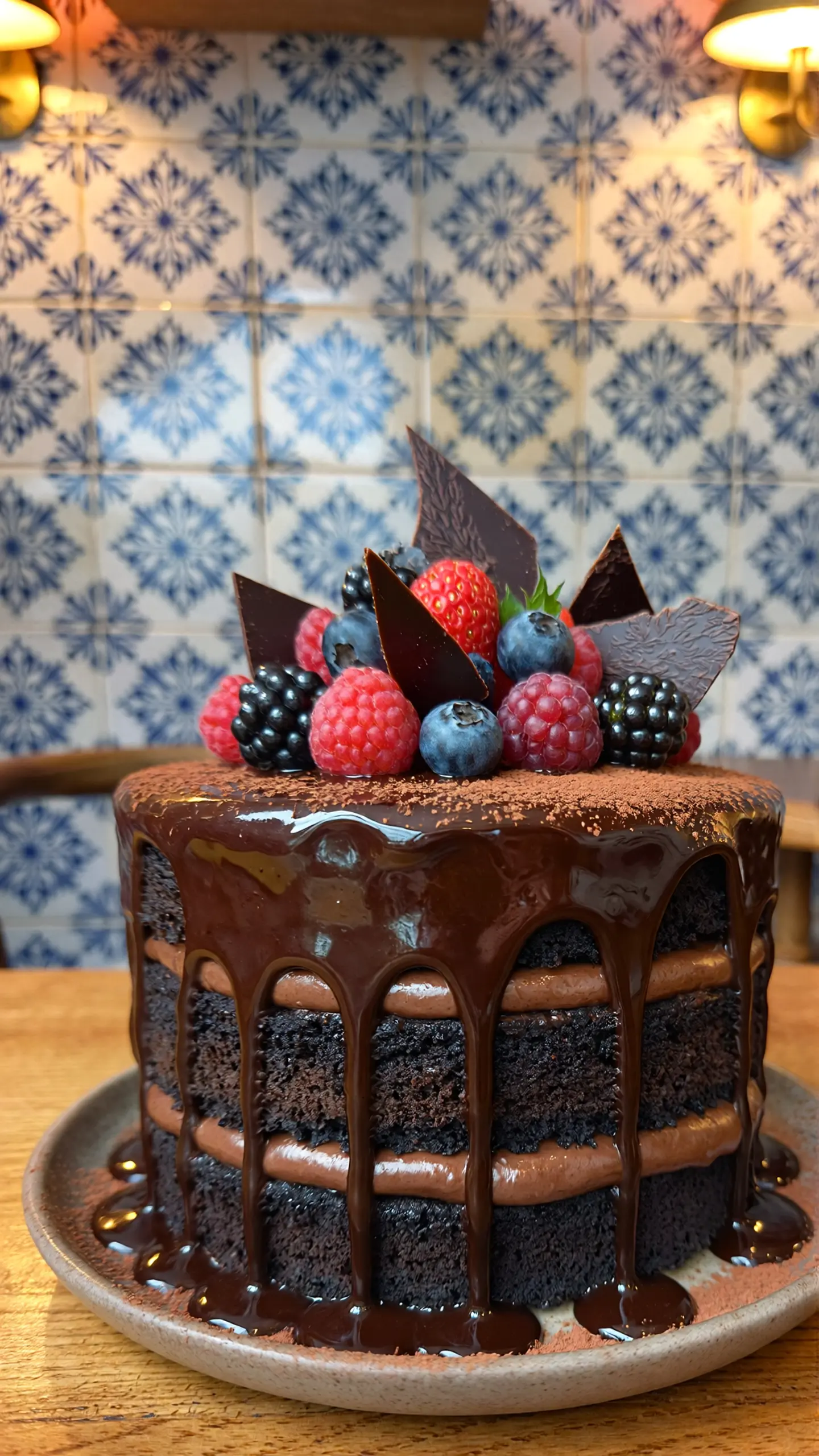
Lisbon Chocolate Cake
There is a particular kind of food memory that stays with you for years. Not the Michelin-starred tasting menu or the elaborate dessert with twelve components — but a single, quiet, unassuming thing eaten at a small table on a cobblestone street that you cannot stop thinking about long after the trip is over. For an enormous number of travelers to Portugal’s capital city, that thing is the Lisbon chocolate cake.
According to TripAdvisor’s 2023 destination food trend report, Lisbon ranked as the third most food-memorable city in Europe, with its chocolate desserts specifically cited in over 62% of positive dining reviews mentioning sweets. The cake that keeps appearing — in café windows, on pastelaria counters, at the tables of both humble neighborhood bakeries and acclaimed restaurants — is a deeply fudgy, intensely chocolate, almost brownie-adjacent cake with a texture that defies simple description. It is simultaneously dense and light.
Moist and structured. Intensely chocolatey yet somehow not heavy. It is typically served slightly warm, dusted with powdered sugar, and accompanied by a small scoop of vanilla ice cream or a dollop of fresh cream — and it is one of the most singularly satisfying chocolate desserts in the world.
This recipe is a faithful home adaptation of the classic Lisbon chocolate cake — built on the traditional Portuguese technique of incorporating ground almonds for body and moisture, using high-quality dark chocolate as the primary flavor driver, and relying on whipped eggs for lift rather than chemical leaveners. The result is a cake that honors the original in every meaningful way and brings the soul of a Lisbon café directly to your table.
Table of Contents
Ingredients
The Lisbon chocolate cake is a study in ingredient discipline. There are very few components, which means the quality of each one matters significantly more than it would in a complex multi-element recipe. Do not compromise on the chocolate.
For the Cake:
- 200g (7 oz) high-quality dark chocolate, 70% cacao minimum, finely chopped (use a chocolate bar, not chips — chips contain stabilizers that prevent the smooth, glossy melt this cake requires)
- 150g (⅔ cup) unsalted butter, cut into tablespoon-sized pieces, plus more for greasing
- 150g (¾ cup) granulated sugar, divided
- 4 large eggs, separated, at room temperature
- 100g (1 cup) ground almonds (almond flour — blanched and finely ground, not almond meal which is coarser and retains the skin)
- 1 teaspoon pure vanilla extract
- ¼ teaspoon fine sea salt
- 1 tablespoon strong espresso or very strong brewed coffee (does not make the cake taste like coffee — amplifies the chocolate flavor dramatically)
For Finishing:
- Powdered sugar for dusting
- Flaky sea salt (Flor de Sal if you want to be authentically Portuguese) for scattering over the top
- Cocoa powder for an optional deeper dusting
For Serving:
- Vanilla bean ice cream or gelado de baunilha for the full Lisbon café experience
- Fresh lightly whipped cream with a touch of vanilla
- Fresh raspberries or strawberries (the fruit acidity cuts through the richness magnificently)
- A small pour of Porto wine or Moscatel alongside for an authentically Portuguese pairing
Smart Substitutions: Nut allergy? Replace the ground almonds with an equal weight of fine polenta (cornmeal) — it provides similar body and a slightly more rustic texture, or use oat flour for a more neutral flavor. No espresso? A tablespoon of hot water works as a substitute, though you will sacrifice some of the chocolate depth the coffee provides. Prefer milk chocolate? The cake will be sweeter and less complex — if going this route, reduce the sugar by 30g. For a dairy-free version, use high-quality vegan dark chocolate (most 70%+ dark chocolate is naturally dairy-free — check the label) and replace the butter with refined coconut oil or a high-quality vegan butter like Miyoko’s.
Timing
The Lisbon chocolate cake is a remarkably efficient bake. Its short ingredient list and straightforward technique mean that even a relatively inexperienced baker can produce an exceptional result. Total time from first ingredient to first slice is 1 hour 10 minutes — including the essential resting period before serving.
- Prep Time: 20 minutes (melting chocolate, separating eggs, measuring ingredients)
- Cook Time: 22–25 minutes
- Cooling Time: 25 minutes (essential — the cake needs to settle before slicing)
- Total Time: 1 hour 10 minutes
- Servings: 10–12 slices
- Difficulty Level: Easy to Intermediate
Pro Timing Tip: This cake is genuinely better the day after baking. As it sits overnight at room temperature, loosely covered, the moisture redistributes through the crumb and the chocolate flavor deepens and intensifies. Making it the day before serving is not just practical — it is actively recommended for the best possible eating experience. Many of Lisbon’s most celebrated café versions are made in batches the evening before and served the following morning.
Step 1: Prepare Your Pan and Melt the Chocolate
Preheat the oven to 170°C (340°F). Butter a 22–23cm (9-inch) round cake pan generously and line the bottom with a parchment paper circle. Butter the parchment as well. For clean, even sides, run a strip of parchment paper around the interior edge of the pan and press it gently against the buttered side — this prevents the cake from sticking to the pan during baking and produces clean, neat edges when unmolded.
Place the finely chopped dark chocolate and the butter in a heatproof bowl set over a pot of gently simmering water — the bottom of the bowl must not touch the water. Stir occasionally until both are completely melted and combined into a smooth, glossy, deeply dark mixture. Remove from the heat and let cool for 5 minutes. Stir in the espresso and the vanilla extract. The mixture should be fluid and glossy with no visible butter separation. Set aside.
Step 2: Build the Chocolate Base
Add 100g (half the total sugar) to the slightly cooled chocolate-butter mixture and whisk vigorously until fully incorporated. Add the egg yolks one at a time, whisking well after each addition until the mixture is smooth, glossy, and slightly thickened. The yolks emulsify the fat and liquid components of the chocolate mixture, creating a stable, cohesive base that will hold the structure of the final cake.
Add the ground almonds and fine sea salt and fold them in with a flexible spatula until just combined and no dry almond flour is visible. The ground almonds serve multiple functions in this cake — they provide structure without gluten, contribute moisture through their natural oils, add a subtle nutty depth that complements the dark chocolate beautifully, and give the finished cake its characteristic dense-yet-tender texture that sets a Lisbon chocolate cake apart from a standard flour-based chocolate cake.
Step 3: Whip the Egg Whites
In a perfectly clean, dry bowl — any trace of fat or moisture will prevent proper whipping — add the egg whites and a pinch of salt. Using a hand mixer or a stand mixer fitted with the whisk attachment, whip the egg whites on medium speed until foamy and opaque, about 2 minutes. Gradually add the remaining 50g of sugar in a slow, steady stream while continuing to whip. Increase to medium-high speed and whip until the whites reach firm, glossy peaks that hold their shape when the beater is lifted but are not dry or grainy.
The whipped egg whites are the sole leavening agent in this cake. They are what gives the Lisbon chocolate cake its paradoxical lightness despite its dense, fudgy character — the trapped air expands during baking, lifting the heavy chocolate mixture into something airy and almost soufflé-like in texture. Treat them with care.
Step 4: Fold and Combine
Add one third of the whipped egg whites to the chocolate mixture and fold vigorously with a flexible spatula — this first addition is designed to lighten the chocolate base and make it more receptive to the remaining whites. You can be somewhat aggressive here. Add the remaining egg whites in two additions, folding each one with slow, deliberate strokes that go down through the center of the batter, along the bottom of the bowl, and up and over the top — the classic folding motion that incorporates without deflating.
Fold until no visible white streaks remain but stop immediately at that point. Overfolding deflates the egg whites and produces a denser, heavier cake than intended. The finished batter should be airy, mousse-like, and noticeably lighter than the chocolate base was before the whites were added. Pour it gently into the prepared pan and smooth the top with an offset spatula.
Step 5: Bake Low and Watch Carefully
Place the cake in the preheated 170°C (340°F) oven and bake for 22–25 minutes. The lower baking temperature is deliberate and important — it allows the cake to set gently without overbaking the edges while the center remains slightly underdone. When done correctly, the Lisbon chocolate cake should emerge from the oven with a set exterior and a center that still has a very slight wobble when the pan is gently shaken — similar to a baked cheesecake at the point of removal.
A toothpick inserted into the center should come out with moist crumbs and perhaps a small amount of soft batter — not liquid, but not clean either. If it comes out completely clean, the cake has been baked too long and will be drier than the authentic version. Begin checking at the 22-minute mark. The top of the cake will be set and slightly cracked — this is completely normal and part of the cake’s rustic, beautiful character.
Step 6: Cool and Unmold with Care
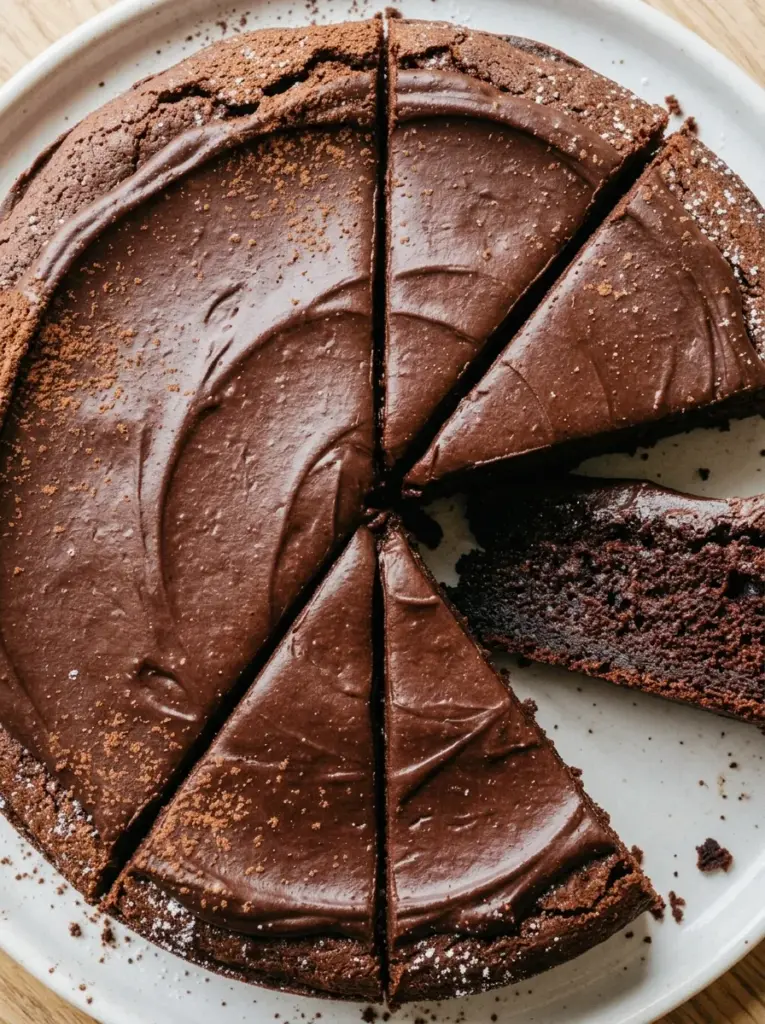
Remove the cake from the oven and allow it to cool in the pan for 20 minutes without touching it. The cake will deflate slightly as it cools — this too is completely normal and expected, and is what creates the characteristic slightly sunken center that gives a Lisbon chocolate cake its visual identity. Do not be alarmed. It is not a failure — it is the feature.
After 20 minutes, run a thin spatula or offset knife gently around the edge of the cake to loosen it from the pan. Place a wire cooling rack over the top of the pan, invert carefully, remove the pan and peel away the parchment, then invert again onto a serving plate so the top of the cake faces upward. Allow to cool for another 5 minutes.
Step 7: Finish and Serve
Dust the top of the cake generously with powdered sugar through a fine mesh sieve — hold the sieve high above the cake for the most even, elegant coverage. Scatter a small pinch of flaky sea salt across the powdered sugar surface — it catches the light beautifully and the salt-chocolate combination is deeply compelling. For an additional visual layer, dust lightly with cocoa powder before the powdered sugar for a two-tone finish.
Serve each slice slightly warm, with a generous scoop of vanilla ice cream placed directly alongside the cake on the plate. The ice cream melts slowly into the warm chocolate cake and the contrast of temperatures and textures — warm dense chocolate against cold creamy vanilla — is precisely the combination that has made this dessert legendary in Lisbon’s cafés. Add a few fresh raspberries for color and acidity, and consider a small pour of chilled Moscatel or tawny Porto alongside for an authentically Portuguese dessert experience.
Healthier Alternatives for the Recipe
The Lisbon chocolate cake is already one of the more nutritionally respectable chocolate cakes available — gluten-free by nature, relatively low in sugar compared to frosted layer cakes, and rich in beneficial compounds from the dark chocolate and almonds. These modifications push it further in a health-forward direction.
Reduce the Sugar: Decrease the total sugar from 150g to 100g — the bitterness of the 70% dark chocolate means the cake will still be perfectly pleasurable at a reduced sugar level. The flavor will be slightly more intensely chocolate and less sweet, which many adults actually prefer. Each slice saves approximately 35 calories and 9 grams of sugar at this reduction.
Increase the Dark Chocolate Percentage: Use 85% cacao dark chocolate instead of 70%. This reduces the sugar content within the chocolate itself, increases the flavanol concentration, and produces a more intensely flavored, slightly more bitter cake that is extraordinary alongside sweet vanilla ice cream. Reduce the added sugar by 20g to compensate for the reduced sweetness of the chocolate.
Make It Fully Gluten-Free and Grain-Free: This cake is already naturally gluten-free when made with certified gluten-free ground almonds — no substitutions required. Simply verify that all other ingredients (chocolate, vanilla extract, baking spray) are certified gluten-free if serving to someone with celiac disease or serious gluten sensitivity.
Add Nutritional Complexity: Stir 2 tablespoons of raw cacao powder into the chocolate mixture along with the ground almonds — raw cacao is higher in antioxidants than processed cocoa and adds a deeper, more complex chocolate flavor. Add 1 tablespoon of chia seeds for additional omega-3 fatty acids and fiber — they are invisible in the finished cake but contribute meaningful nutritional value.
Lower-Fat Version: Reduce the butter from 150g to 100g and replace the missing fat with 50g of full-fat Greek yogurt stirred into the chocolate mixture along with the egg yolks. The yogurt adds protein, reduces saturated fat, contributes a subtle tanginess that complements the dark chocolate beautifully, and keeps the cake moist without the full butter quantity.
Serving Suggestions
The Lisbon chocolate cake is elegant in its simplicity and needs very little elaboration — but these serving approaches honor its character while adding memorable details.
The Authentic Lisbon Café Experience: Serve a slice slightly warm on a plain white plate alongside a single scoop of vanilla gelato or ice cream and a small cup of strong espresso. This is precisely how it is served in Lisbon’s finest cafés — no garnish, no sauce, no ceremony. The quality of the ingredients speaks for itself.
With Raspberry Coulis: Warm a cup of fresh or frozen raspberries with 2 tablespoons of sugar and a squeeze of lemon juice over medium heat until the berries break down into a loose sauce. Strain through a fine mesh sieve to remove seeds. Pool the bright red coulis on one side of the plate and place the cake slice partially on and off it. The visual contrast of deep chocolate and vivid raspberry is as beautiful as the flavor combination is harmonious.
As a Dinner Party Dessert: Plate individual slices on warmed plates — place the plates in a low oven at 150°F for 5 minutes before plating — and serve with a quenelle of vanilla cream (heavy cream whipped to soft peaks with a teaspoon of vanilla bean paste). The warm plate keeps the cake at the perfect temperature through the dessert course and signals genuine hospitality and attention to detail.
With Salted Caramel Sauce: A drizzle of warm salted caramel sauce over the top of the cake and pooling on the plate elevates this from café dessert to restaurant-caliber plating. The caramel’s butterscotch sweetness against the bitter dark chocolate and flaky sea salt is a flavor combination of almost embarrassing deliciousness.
Paired with Portuguese Wine: For an authentically Portuguese dessert pairing, serve alongside a 2 oz pour of tawny Porto — its dried fruit, walnut, and caramel notes complement the dark chocolate beautifully. Moscatel de Setúbal, a lusciously sweet fortified wine from the Setúbal peninsula south of Lisbon, is the more local and equally stunning alternative.
For a Dessert Table: Cut into small 2-inch squares and arrange on a slate board dusted with powdered sugar. Place a small raspberry or a piece of gold leaf on each square. This format serves 20–24 people from a single cake and makes for an elegant, bite-sized dessert option at gatherings, weddings, or dinner parties.
Common Mistakes to Avoid
The Lisbon chocolate cake is forgiving in many ways, but these specific errors consistently produce results that fall short of the original’s extraordinary standard.
Overbaking: This is the single most common mistake and the one with the most dramatic impact. The Lisbon chocolate cake is meant to be slightly underbaked by conventional standards — fudgy, moist, almost molten in the very center. A toothpick coming out clean means the cake has been in the oven too long. Pull it at the first sign of set edges and a center that still wobbles slightly.
Using low-quality chocolate: With so few ingredients, the chocolate is the flavor foundation of the entire cake. A mediocre chocolate produces a mediocre cake — there is nowhere for its flaws to hide. Use a chocolate you would be happy eating out of hand. Valrhona, Callebaut, Green & Black’s, Lindt Excellence, and Guittard are all excellent choices at various price points.
Undermixing the egg whites: Soft, under-whipped egg whites that do not hold proper peaks will deflate almost entirely during folding, leaving the cake heavier and denser than intended. The whites should hold firm, glossy peaks that stand upright when the beater is lifted — not soft peaks that curl over.
Folding too aggressively: The opposite problem — overfolding the whites into the chocolate mixture — deflates the air that provides the cake’s characteristic lightness. Use slow, deliberate folding strokes and stop the moment the whites are fully incorporated. Err on the side of slightly under-folded rather than over-folded.
Using almond meal instead of ground almonds: Almond meal retains the brown skin of the almond and produces a darker, coarser, more rustic texture. Ground almonds or almond flour — blanched, peeled, and finely ground — produce the smooth, silky texture that the authentic cake requires. They are sold separately in most grocery stores and baking supply shops.
Panicking at the deflation: Every first-time baker of this cake panics when it deflates as it cools. It will happen. It is supposed to happen. The slight sinking in the center is not a failure — it is a feature of a correctly made Lisbon chocolate cake and is part of what gives it its intimate, honest, beautiful appearance. Embrace it.
Storing Tips for the Recipe
At Room Temperature: The Lisbon chocolate cake stores exceptionally well at room temperature, loosely covered with a clean kitchen towel or a cake dome, for up to 3 days. As noted earlier, it genuinely improves on day two as the moisture redistributes and the chocolate flavor deepens — make it the day before whenever possible.
Refrigerating: Refrigerate the cake loosely covered for up to 5 days. The cold temperature firms the cake noticeably — remove it from the refrigerator at least 30 minutes before serving, or serve a slice briefly warmed in a 150°C (300°F) oven for 5 minutes for the best possible eating experience.
Freezing Individual Slices: Slice the cooled cake and freeze individual slices on a parchment-lined baking sheet until solid, then wrap each slice in plastic wrap and store in a freezer bag for up to 2 months. Thaw at room temperature for 1–2 hours or warm directly from frozen in a low oven. The texture after freezing and thawing is remarkably well-preserved — arguably better maintained than most flour-based cakes.
Freezing the Whole Cake: Wrap the fully cooled, undusted cake tightly in plastic wrap and then in foil and freeze for up to 2 months. Thaw overnight at room temperature still wrapped — unwrap only after it has fully thawed to prevent condensation forming on the surface. Dust with powdered sugar immediately before serving.
Make-Ahead Strategy: This cake is one of the most practical make-ahead desserts available for dinner parties and gatherings. Bake up to 2 days in advance, store at room temperature loosely covered, and dust with powdered sugar immediately before serving. The entire dessert course is handled before the first guest arrives.
Conclusion
The Lisbon chocolate cake is the kind of recipe that quietly changes how you think about chocolate desserts. There are no layers to assemble, no frosting to smooth, no complex techniques requiring specialized equipment. There is only the discipline of great ingredients, handled with care and baked with intention, producing something that tastes like considerably more than the sum of its parts.
It is a cake with a soul. It carries the warmth of a cobblestone café, the quiet pleasure of a pastry counter on a sunny morning, the particular contentment of finding a perfect thing and eating it slowly. Making it at home and serving it with vanilla ice cream and a dusting of powdered sugar is one of the most satisfying acts of hospitality a home cook can perform — because it delivers, without fail, the experience of feeling cared for.
Bake this cake for someone you love, or for yourself on an occasion that deserves something genuinely extraordinary. Share your results in the comments below — did you serve it warm with ice cream, try the raspberry coulis, or pair it with a glass of Porto? Tell us how it went. And if this recipe has you falling in love with Portuguese baking, explore our [Pastel de Nata — Authentic Portuguese Custard Tarts], [Portuguese Almond and Orange Cake], and [Bolo de Mel — Traditional Molasses Cake from Madeira] for more deeply flavored, beautifully simple Portuguese desserts that deserve a permanent place in your baking repertoire.
FAQs
Q: What makes this cake specifically “Lisbon” — is it a regional recipe? The term “Lisbon chocolate cake” refers to the style of dense, fudgy, ground almond-based chocolate cake that has become iconic in Lisbon’s café and pastelaria culture over the past two decades. It draws on the deep Portuguese tradition of almond-based pastry — Portugal’s Moorish culinary heritage left an enduring legacy of almond and egg-based confections that remains central to the country’s baking identity. The cake is not tied to a single historical recipe but rather to a style that has been refined across hundreds of cafés and bakeries in the city.
Q: My cake came out completely flat and very dense. What went wrong? The most common cause is improperly whipped egg whites — if they were under-whipped, they contain insufficient air to lift the heavy chocolate mixture during baking. The whites must reach firm, glossy peaks before folding. The second common cause is overfolding, which deflates the whites after they are correctly whipped. A third possibility is that the chocolate mixture was too hot when the whites were added, cooking and deflating them on contact. Let the chocolate base cool for at least 5 minutes before folding in the whites.
Q: Can I use a springform pan instead of a regular cake pan? Yes, and a springform pan is actually excellent for this cake because it allows you to release the sides without inverting — since the Lisbon chocolate cake is quite delicate when warm, minimizing handling is beneficial. Use a 22–23cm springform pan, line and butter the bottom, and release the sides after the 20-minute cooling period. Slide the cake off the base onto a serving plate with a thin spatula.
Q: The cake sank dramatically in the center after cooling. Is this normal? Yes — and it is not a mistake. All correctly made Lisbon chocolate cakes deflate and sink slightly in the center as they cool. This is caused by the collapse of the egg white foam as it cools and sets, and it is a defining characteristic of the recipe rather than a sign of error. The slight depression in the center actually serves a functional purpose — it is the perfect natural bowl for a scoop of ice cream or a pool of cream, which is precisely how the cake is served in Lisbon.
Q: Can I add any flavorings to customize this cake? Absolutely — and several variations are particularly beautiful. A teaspoon of orange zest folded into the batter adds a bright citrus note that complements dark chocolate in a classic Portuguese flavor pairing. A pinch of cinnamon and a pinch of smoked chili powder creates a Mexican chocolate-adjacent flavor profile that is deeply complex. A tablespoon of Licor Beirão, Amaretto, or dark rum added with the vanilla creates an adult version with a warming, aromatic depth. A tablespoon of instant espresso powder deepens the chocolate flavor without adding any coffee taste.
Q: Is this cake gluten-free? Yes — when made with certified gluten-free ground almonds and certified gluten-free dark chocolate (most high-quality dark chocolate bars are naturally gluten-free but cross-contamination can be a concern for those with celiac disease — check the label), this cake contains no gluten from any source. There is no flour of any kind in the recipe. It is naturally gluten-free by design, not by modification, and is one of the most elegant naturally gluten-free desserts available to home bakers.
Q: How do I know which chocolate to buy for this recipe? Look for a bar labeled at least 70% cacao with the fewest possible additional ingredients — ideally just cacao mass, cocoa butter, sugar, and vanilla. Avoid chocolates with added milk solids, soy lecithin in large quantities, or artificial flavorings. Single-origin dark chocolates from Ecuador, Madagascar, or São Tomé tend to have the most complex, nuanced flavor profiles and produce the most interesting finished cakes. For a more accessible option, Lindt Excellence 70% and Green & Black’s 70% are reliably excellent and widely available at reasonable prices.
More Dessert Recipes to Try
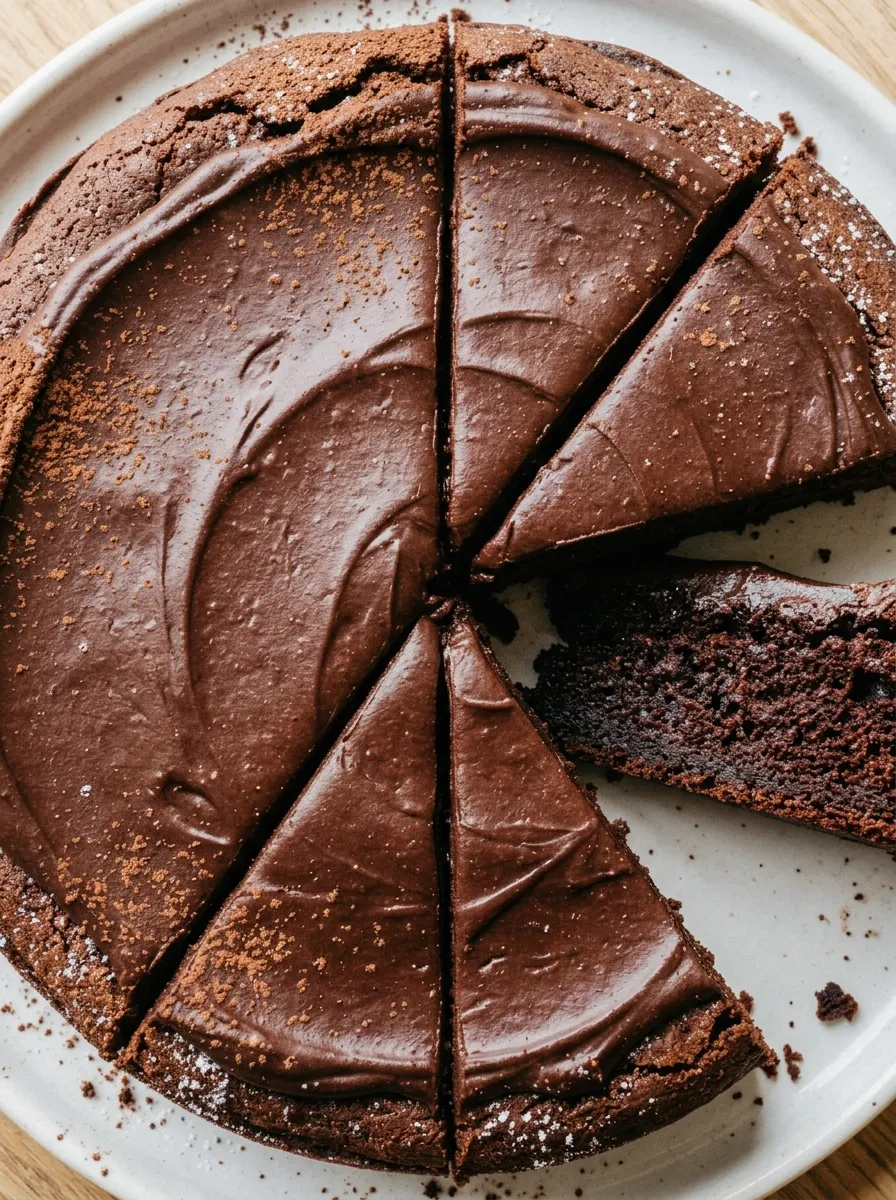

Lisbon Chocolate Cake
Ingredients
Equipment
Method
- Preheat the oven to 350°F (175°C).
- Grease two 9-inch round cake pans and line the bottoms with parchment paper.
- In a large bowl, whisk together the flour, cocoa powder, sugar, baking powder, baking soda, and salt.
- Add the eggs, buttermilk, vegetable oil, and vanilla extract.
- Mix until the batter is smooth and well combined.
- Slowly pour in the hot coffee while mixing on low speed. The batter will be thin.
- Divide the batter evenly between the prepared cake pans.
- Bake for 28 to 32 minutes, or until a toothpick inserted into the center comes out with only a few moist crumbs.
- Let the cakes cool in the pans for 10 minutes.
- Transfer the cakes to a wire rack and let them cool completely.
- To make the frosting, beat the softened butter until creamy.
- Gradually add the powdered sugar and cocoa powder.
- Add the vanilla extract, heavy cream, and salt.
- Beat until the frosting is smooth, light, and spreadable.
- Place one cake layer on a serving plate.
- Spread an even layer of chocolate frosting over the top.
- Place the second cake layer on top.
- Cover the top and sides of the cake with the remaining frosting.
- Smooth the frosting with an offset spatula.
- Refrigerate for 30 minutes before slicing for cleaner pieces.
Notes
Do not overmix the batter after adding the flour.
Let the cake layers cool completely before frosting.
For an extra rich finish, add chocolate shavings or a light chocolate ganache drizzle.
Store the cake covered in the refrigerator for up to 4 days.
Let refrigerated slices sit at room temperature for 15 to 20 minutes before serving.
Enjoying AmandBox? Follow us on Pinterest for more recipes.