
Charcuterie Board
Why Do Charcuterie Boards Steal the Show at Every Gathering When So Many Look Messy, Unbalanced, or Run Out of Crowd-Pleasing Options Too Quickly?
Searches for “charcuterie board ideas” and “how to build a charcuterie board” have exploded as hosts look for impressive, low-effort appetizers that encourage mingling and suit various dietary preferences. Yet many boards end up with overcrowded meats, lonely cheese slices, or lack of balance between flavors and textures. If you’ve ever wanted to create a stunning, Instagram-worthy charcuterie board that guests rave about, this comprehensive guide delivers a foolproof blueprint for success. This versatile spread combines premium cured meats, artisanal cheeses, fresh and dried fruits, nuts, spreads, and crunchy accompaniments into a beautiful, interactive centerpiece. Whether for date nights, holiday parties, wine nights, or casual get-togethers, a well-designed charcuterie board feels luxurious while being surprisingly simple to assemble.
Table of Contents
Ingredients List
This recipe builds one generous board serving 8-12 people. Focus on variety in flavors, textures, and colors for maximum appeal:
Meats (4-6 oz per person total):
- 8 oz prosciutto
- 6 oz salami (genoa or soppressata)
- 6 oz chorizo or spicy salami
- 4 oz smoked ham or coppa
Cheeses (4-6 oz per person total):
- 8 oz soft cheese (brie or camembert)
- 6 oz semi-hard (cheddar, gouda, or manchego)
- 6 oz blue cheese or goat cheese
- 4 oz aged parmesan or gruyère
Accompaniments:
- 1 cup mixed olives (kalamata and castelvetrano)
- ½ cup fig jam or honey
- ½ cup whole-grain mustard
- 1 cup mixed nuts (almonds, walnuts, pistachios)
- 2 cups fresh fruit (grapes, berries, sliced apples or figs)
- 1 cup dried fruit (apricots, cranberries)
- 1 baguette or crackers (assorted types)
- Fresh rosemary or thyme sprigs for garnish
- Optional: dark chocolate pieces, pickled vegetables, roasted red peppers
Substitutions for flexibility: Use plant-based meats and vegan cheeses for vegetarian or vegan boards, gluten-free crackers for dietary needs, or add spicy elements like marinated artichokes for bolder flavor. These options maintain visual appeal and balanced taste while accommodating different preferences.
Timing
Total assembly time is 20-30 minutes once ingredients are prepped, making it 80% faster than most cooked appetizers while delivering far greater visual impact. Shopping and prep can be done ahead, allowing you to focus on arranging just before guests arrive. This efficient timeline makes charcuterie boards perfect for both spontaneous gatherings and planned events.
Step 1: Plan and Shop Strategically
Choose 3-4 meats and 3-4 cheeses with contrasting flavors and textures (soft, hard, mild, sharp). Aim for a mix of salty, sweet, tangy, and spicy elements. Shop 1-2 days ahead and store properly. This thoughtful selection prevents a one-note board and ensures something for every palate.
Step 2: Prepare Ingredients
Slice cheeses and meats into easy-to-pick portions (leave some whole for visual interest). Wash and slice fruits. Place spreads in small bowls. Toast nuts lightly for enhanced flavor. Keeping everything bite-sized and ready makes assembly smooth and prevents last-minute stress.
Step 3: Choose and Prepare the Board
Select a large wooden board, slate, or marble platter (at least 18×12 inches). Place it on your serving table. Have small bowls, cheese knives, and spoons ready. Starting with an empty board allows for creative, balanced placement without overcrowding.
Step 4: Build the Board with Balance and Flow
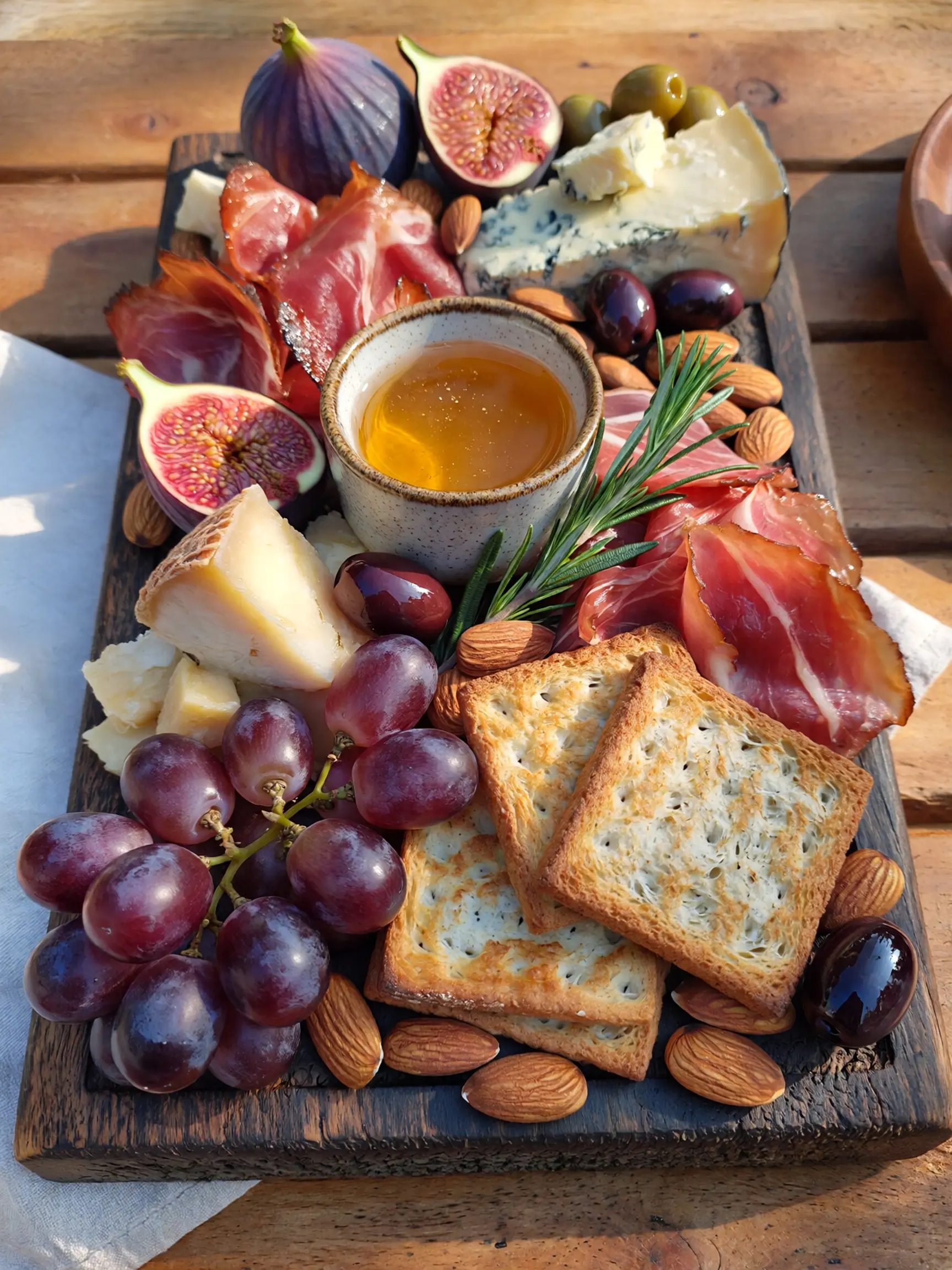
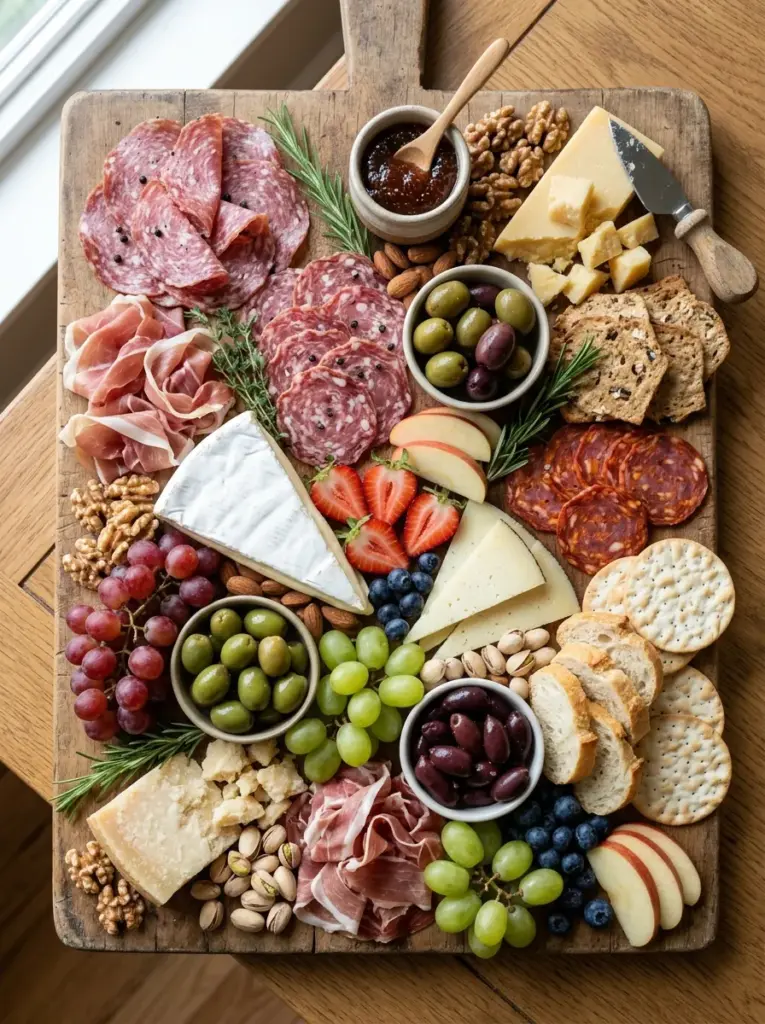
Start by placing larger items like cheese wheels and bowls of spreads. Arrange meats in loose folds or rows for visual movement. Fill gaps with fruits, nuts, and crackers, creating easy pathways for guests. Use color contrast (red salami next to white brie) and group similar items loosely rather than perfectly. Tuck in fresh herbs for aroma and garnish. The goal is abundant yet navigable — guests should easily reach everything.
Step 5: Final Touches and Serve
Add last-minute items like fresh berries right before serving. Provide small plates, napkins, and utensils. Stand back and admire your creation — a well-built board invites conversation and grazing for hours.
Nutritional Information
Per serving (approximate, based on 10 people): 450-600 calories, 30-35g fat, 25-30g carbohydrates, 18-22g protein, and 3-5g fiber. Charcuterie offers a balanced mix of proteins from meats and cheeses, healthy fats from nuts, and natural sugars from fruits. Compared to fried appetizers, it provides more nutrients and satiety. Portion control is natural with grazing. Values vary widely based on selections — focus on quality ingredients for the best nutritional profile.
Healthier Alternatives for the Recipe
Create lighter or more nutritious boards with smart choices. Load up on fresh vegetables (cucumber, bell peppers, cherry tomatoes) and use leaner meats like turkey or prosciutto. Choose lower-fat cheeses or include hummus and nut butters. For vegetarian boards, feature marinated chickpeas, grilled vegetables, and an array of dips. Gluten-free and keto versions are easy with seed crackers, olives, and extra cheeses. These adaptations keep the festive feel while supporting higher-protein, lower-carb, or plant-forward preferences for health-conscious guests.
Serving Suggestions
Present your charcuterie board as the centerpiece for cocktail hour, wine tastings, or game nights. Pair with complementary drinks — red wine with bold cheeses, white or rosé with lighter options, or mocktails for all ages. Create themed boards: Mediterranean with feta and olives, fall harvest with apples and pecans, or dessert-style with chocolates and fruits. Personal tip: Offer small cards labeling cheeses and meats for educational fun. It shines at holidays, bridal showers, or casual Fridays, turning any gathering into a memorable experience.
Common Mistakes to Avoid
Overcrowding the board makes it hard to access items and looks messy. Using only pre-sliced everything loses visual interest. Forgetting balance between salty, sweet, and fresh leads to palate fatigue. Placing everything symmetrically creates a stiff appearance — embrace organic flow instead. Not accounting for dietary needs leaves some guests without options. These pitfalls reduce enjoyment. Plan variety, leave breathing room, and consider your audience for a successful, stress-free board every time.
Storing Tips for the Recipe
Charcuterie is best assembled fresh, but you can prep ingredients up to 24 hours ahead and store separately. Once assembled, leftovers keep in the refrigerator for 2-3 days in airtight containers. Meats and cheeses last longer than fresh fruits. For advance planning, assemble the board without fresh items and add them last-minute. These practices maintain food safety, freshness, and quality for minimal waste.
Conclusion
This charcuterie board guide proves that with thoughtful variety, strategic arrangement, and quality ingredients, you can create a stunning, interactive spread that elevates any gathering without hours in the kitchen. From quick assembly and endless customizations to healthier options and practical tips, it’s the ultimate crowd-pleaser for hosts of all levels. The reliable methods turn potential chaos into elegant, delicious success. Build one for your next event, experiment with seasonal themes, and share your creations in the comments below. What is your favorite combination of cheeses and meats? Explore more entertaining ideas and easy appetizer recipes on the site for endless inspiration. Happy hosting and enjoy every beautiful, flavorful bite!
FAQs
How much food do I need per person?
Plan 4-6 ounces of meat and cheese combined per person, plus plenty of accompaniments for grazing.
Can I make a charcuterie board ahead of time?
Prep components the day before, but assemble 30-60 minutes before guests arrive for best freshness and appearance.
What’s the best board size?
An 18×12 inch or larger board works well for 8-12 people. Use multiple smaller boards for different themes.
How do I keep the board looking fresh?
Add fresh fruits and herbs at the last minute. Keep backups of popular items nearby to replenish as needed.
Are charcuterie boards expensive?
They can be budget-friendly by focusing on a few quality items and filling with affordable nuts, fruits, and crackers. Shop sales and seasonal produce for best value.
More Appetizer Recipes to Try
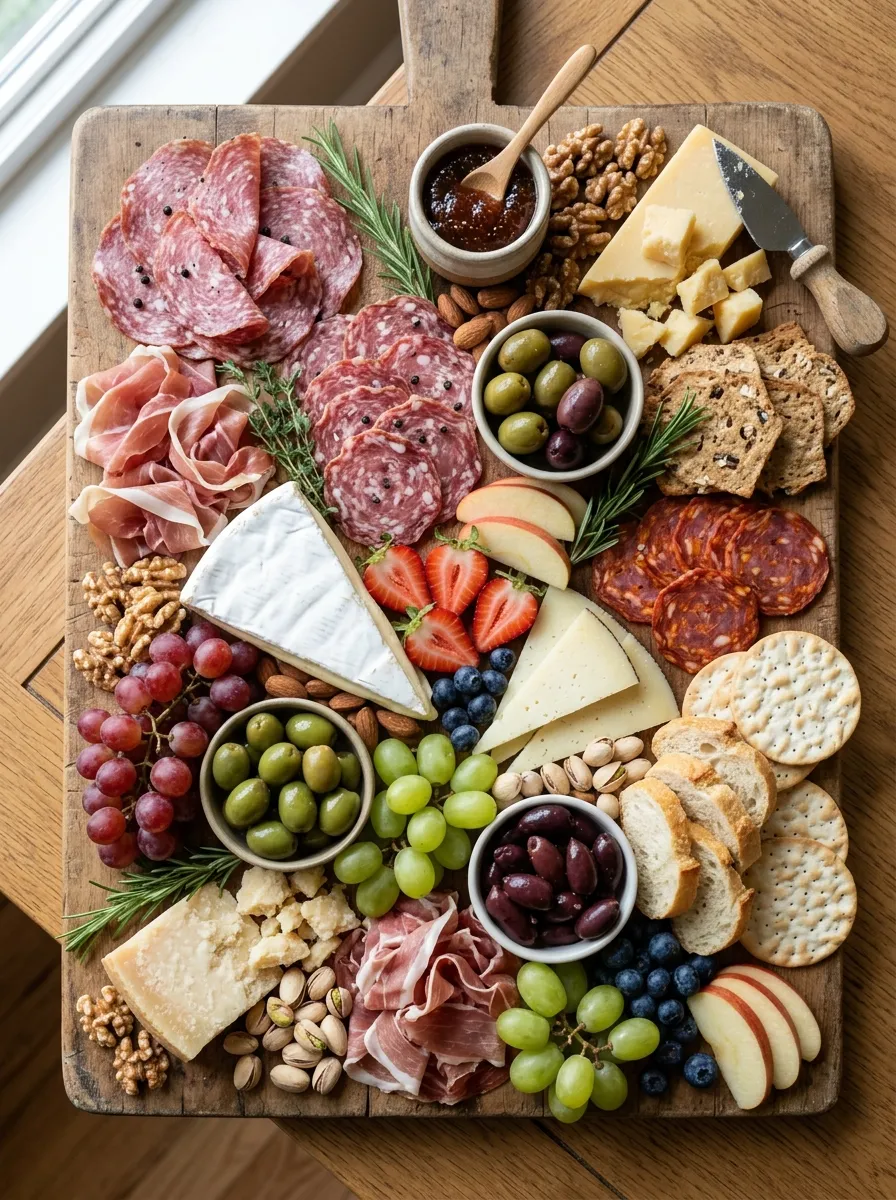

Charcuterie Board
Ingredients
Equipment
Method
- Choose a large serving board or platter with enough space for all the ingredients.
- Place the cheeses on the board, spacing them apart.
- Slice some of the firmer cheeses while leaving the softer cheeses whole.
- Add small bowls of olives, nuts, honey, and fig jam.
- Arrange the sliced turkey and chicken in small folds or rolls around the cheeses.
- Add clusters of grapes, strawberries, blueberries, and sliced apples.
- Fill the remaining spaces with assorted crackers and dried apricots.
- Add fresh rosemary around the board for decoration if desired.
- Serve immediately or cover and refrigerate until ready to serve.
Notes
Slice some cheese ahead of time to make serving easier.
Keep juicy fruits separate from crackers so they stay crisp.
Add ingredients in groups and fill empty spaces with smaller snacks.
Use seasonal fruits for a fresh and colorful presentation.
For a more substantial board, add cooked chicken, turkey, or additional nuts.
Avoid leaving perishable foods at room temperature for more than 2 hours.
Enjoying AmandBox? Follow us on Pinterest for more recipes.